Installation
General Introduction
Space as Part of the Work
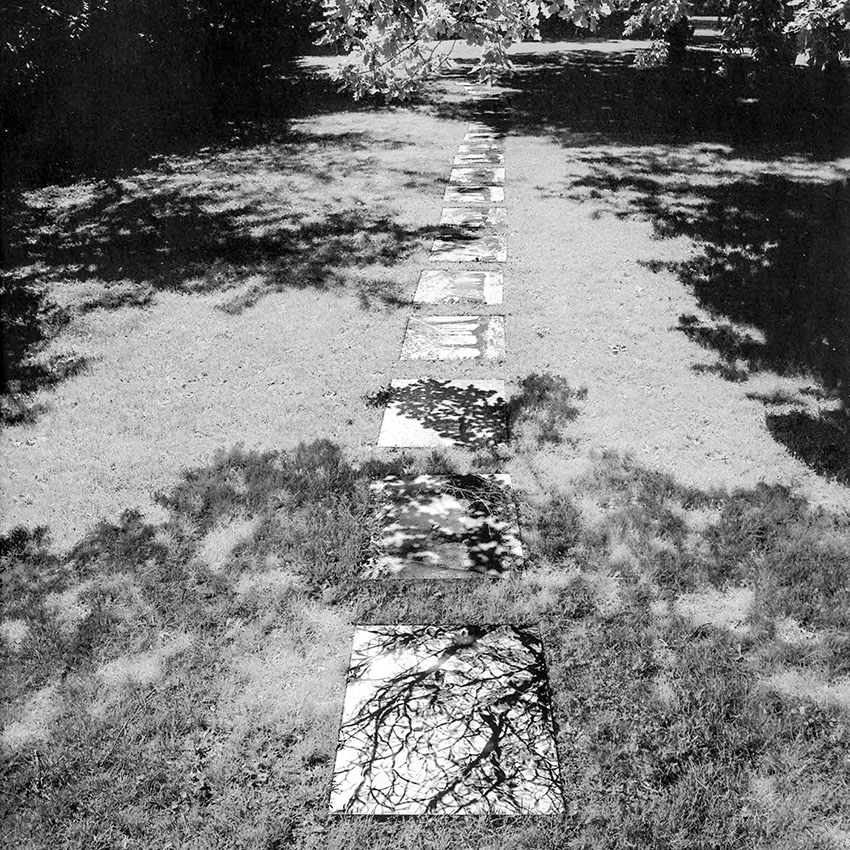
Installation has developed within my practice as an extension of drawing, painting and photography. Rather than considering an artwork as an isolated object, I am interested in what happens when an image enters into a direct relationship with the space that surrounds it.
Architecture, scale, distance, light and the position of the viewer become part of the work. A drawing may extend beyond its frame; a photograph may leave the conventional scale of the photographic print and become almost architectural; a painted surface may transform a wall or alter the perception of a room.
My installations often begin with existing works or materials, but their meaning changes through their placement. The space is not simply a place in which the work is shown; it becomes one of the materials of the work itself.
This also introduces the question of the body. The viewer no longer encounters an image only from the front. One approaches it, moves around it, sees it from a distance and then at close range. The work is experienced through time and movement.
Across these installations, I am interested in the fragile territory between image and object, presence and absence, material and immaterial, the visible and what remains beyond visibility.
Sometimes an installation begins with a carefully constructed idea; at other times it develops from an accident, a particular architecture, or an unexpected encounter. What matters to me is the possibility that an artwork can change through the space it inhabits—and, in return, temporarily change our perception of that space.

Presence / Absence — Duingt
Duingt, Haute-Savoie, France, c. 2021
Analogue black-and-white photography
Silver gelatin prints
Positive / negative diptych
Installation project: enlargement to approximately 3 m high

From Accident to Presence
The work began with a photograph taken near Duingt, Haute-Savoie, France, around five years ago. In a landscape marked by the history of the old village and its church, I encountered a crucifix standing almost apart from its surroundings. Despite its isolated position, people continued to come to the site, leaving flowers and stopping to pray. What interested me was not simply the religious figure itself, but this persistence of presence: an image continuing to receive gestures of faith, memory and devotion.
The photograph was made on analogue film and later developed and printed by hand in my darkroom. The first silver-gelatin print came out as I had intended. While preparing another print, however, I accidentally placed the photographic paper with the wrong side exposed. The image appeared strangely reversed, almost like a negative.
Instead of discarding this mistake, I decided to continue working with it. I extended the exposure and darkroom process until the accidental image acquired its own density and visual quality. What began as an error became a second state of the photograph.
Placed side by side, the two images changed each other. The first belongs to the visible world: the crucifix, vegetation, mountain and sky. The second seems to come from somewhere behind that world. Light becomes darkness, darkness becomes light, and the familiar image returns as an apparition.
The diptych therefore creates a movement forward and backward, positive and negative, presence and absence, visible and invisible. It is almost as if one photograph were the exterior image and the other its interior memory.
This duality led me back to the question of faith. Faith is connected to what can be seen, but also—and perhaps more profoundly—to what cannot be seen. The accidental negative became, for me, not an illustration of belief but another possible state of the same image: its shadow, its memory, or something that persists behind appearances.
From darkroom print to installation
The project now moves from the intimate scale of the darkroom toward an architectural scale. I imagine enlarging the diptych to approximately two metres in height and installing the two photographs directly on the floor, leaning against the stone wall of a monastery or other contemplative space near Duingt.
At this scale, the work would no longer function simply as a photograph hanging on a wall. The body of Christ would approach human scale, and the two images would become almost physical presences within the architecture.
Placing them on the floor rather than hanging them conventionally is important. It removes some of the distance associated with a museum display. The photographs inhabit the same ground as the visitor. They remain photographic objects, but they also begin to behave like an installation.
Within the silence, stone, natural light and historical memory of a monastic space, the diptych could establish a dialogue between photography and belief, accident and intention, contemporary image and ancient ritual.
The project thus completes a kind of circular journey: from an encounter with a crucifix in the landscape, to the negative, to the darkroom, through an accidental print, and finally back into an architectural space associated with contemplation.
The accident is no longer a mistake to be corrected. It becomes the point at which the second image—and perhaps the work itself—begins.


What Remains Unseen — Duingt, c. 2021
Diptych, analogue black-and-white photography
Hasselblad 500 c/M · Kodak Tri-X 400 · Rodinal
Silver gelatin prints on ILFORD MGRC paper
12.7 × 17.8 cm each
Self-developed and hand-printed by the artist in his darkroom.

What Remains Unseen — Duingt, c. 2021
Diptych, analogue black-and-white photography
Hasselblad 500 c/M · Kodak Tri-X 400 · Rodinal
Silver gelatin prints on ILFORD MGRC paper
12.7 × 17.8 cm each
Self-developed and hand-printed by the artist in his darkroom.
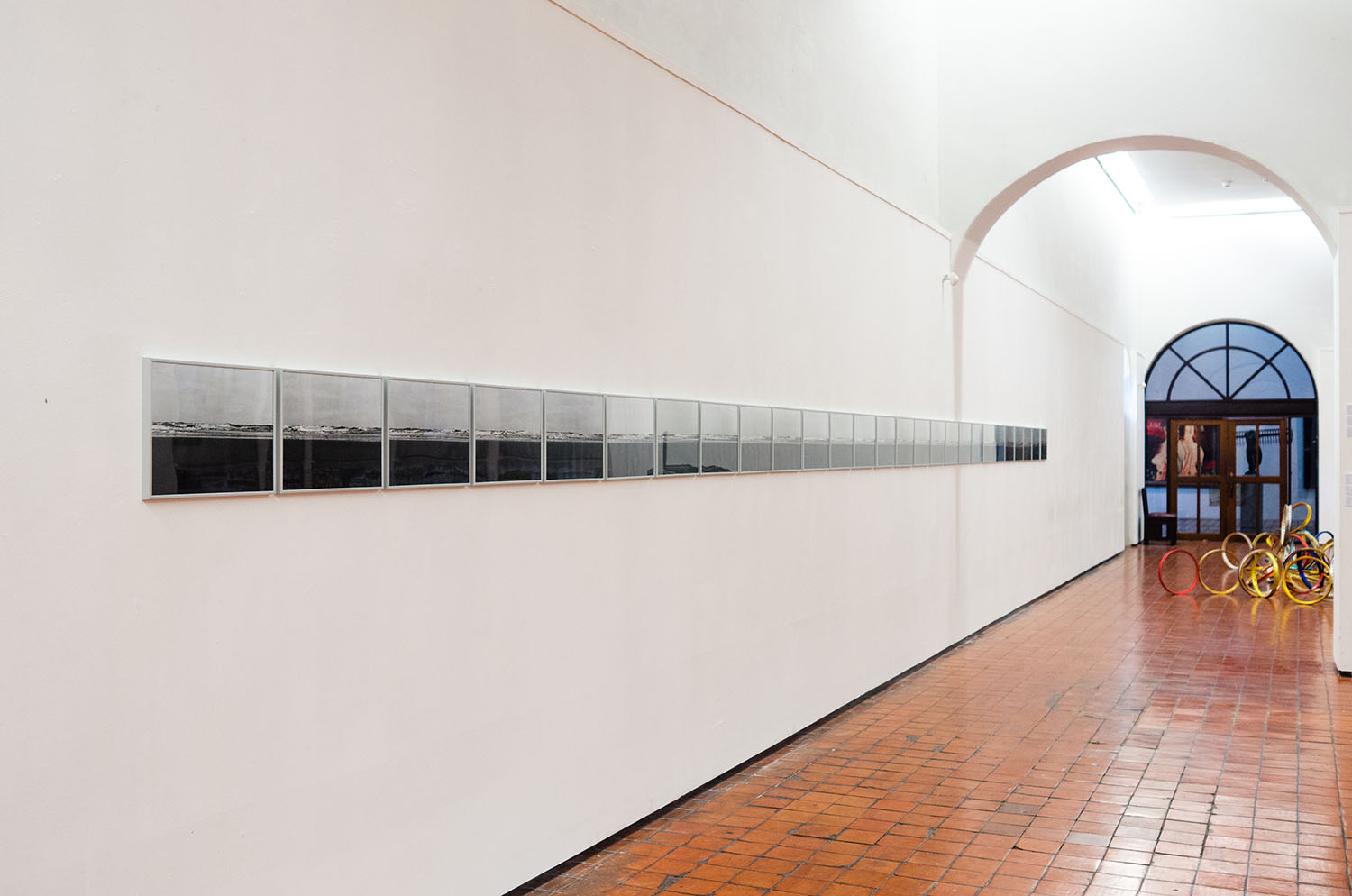
27 Photographic Fragments — States of the Sea
The camera remained fixed in a single position. From the same viewpoint, I photographed the successive movements of the waves.
The horizon remains almost unchanged, while the surface of the sea is continuously transformed. Between one photograph and the next, only a brief interval of time has passed, yet the image can never be repeated: each wave appears, changes and disappears.