Artist In Residence
Artist in Residence — Atelier leZ-Arts, Les Condémines, July 2021
A Residency as a Space of Experimentation
The residency at Atelier leZ-Arts, Les Condémines, Switzerland, in July 2021, developed as a period of concentrated experimentation across drawing, photography and the artist’s book. Invited by Françoise-Hélène Brou, art historian, the residency offered something beyond the physical conditions of a studio. Each working day was followed by conversation. In the evenings, the work produced during the day was reconsidered through discussion—its formal decisions, its possible directions, and its relationship to both art history and contemporary society. This daily movement between making and reflecting became an important part of the residency itself. The studio was therefore not only a place of production, but a place where an artwork could remain unresolved long enough to reveal another possibility. Three distinct bodies of work emerged from this process. Although they use different media, they share a common principle: the material is not simply used to execute an idea; the behaviour of the material participates in determining what the work becomes.
I — Drawing: Charcoal, Transparency and Duration
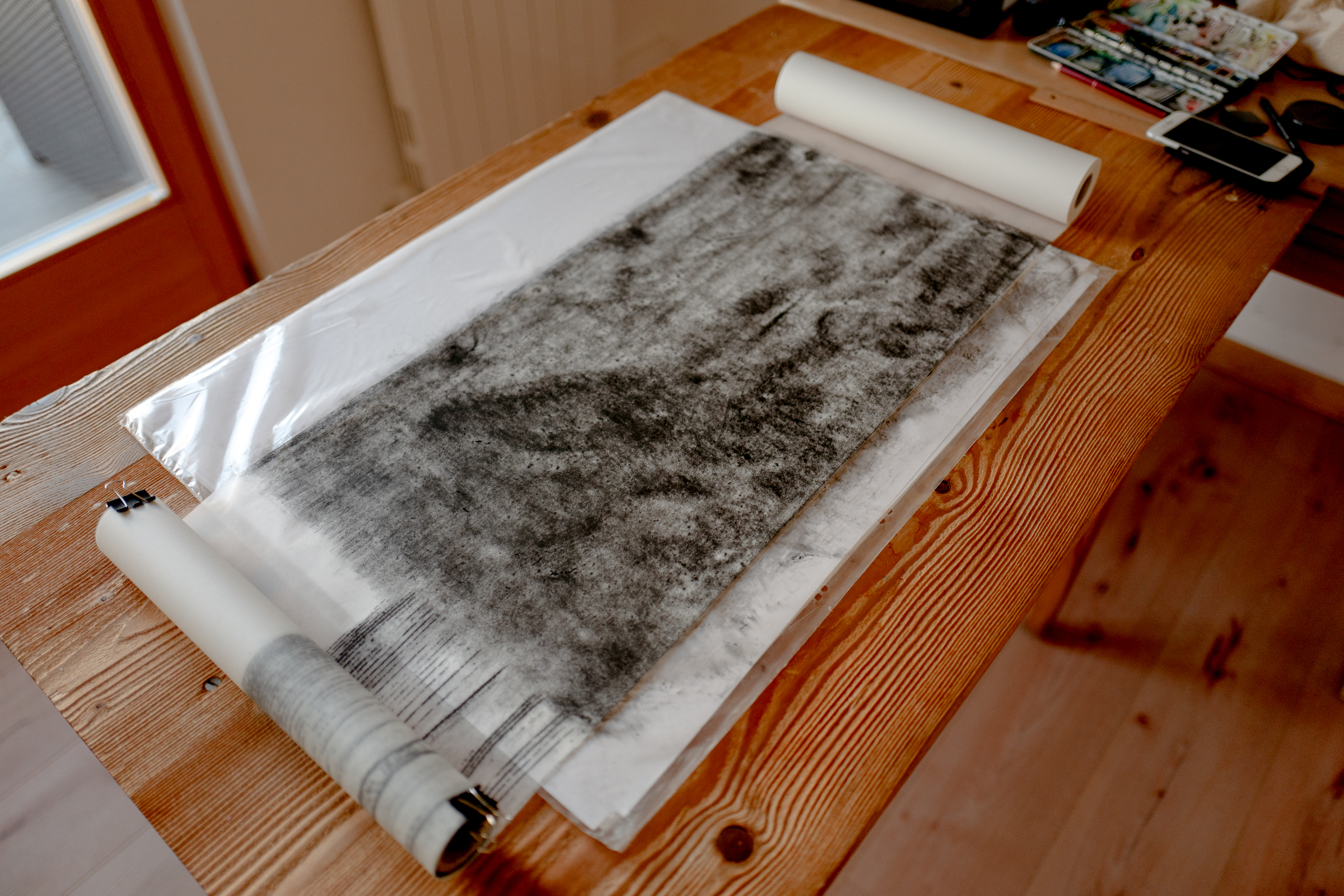
The first experiment began with frottage and charcoal on a continuous roll of tracing paper (papier calque), approximately 30 cm high and 50 metres long. The choice of tracing paper is significant. Unlike an opaque sheet, calque never completely separates the drawing from what lies behind it. It is simultaneously a surface and a membrane. The charcoal deposits itself upon this fragile translucent support while the frottage records encounters between paper, pressure, texture and movement. Working through almost the entire fifty-metre roll transforms drawing into something close to duration. There is no longer a conventional rectangular image with a clearly defined beginning and end. The gesture accumulates. It advances through the roll. Repetition becomes rhythm, and rhythm gradually becomes a form of measurement—of the body, of time and of the act of drawing itself. The remaining section of the roll was completed several months later in the studio. This interruption is important: what appears to be one continuous work actually contains two moments of time—the concentrated period of the residency and its later continuation. The roll consequently becomes both drawing and record.
II — Photography: Positive / Negative — La nuit en plein jour
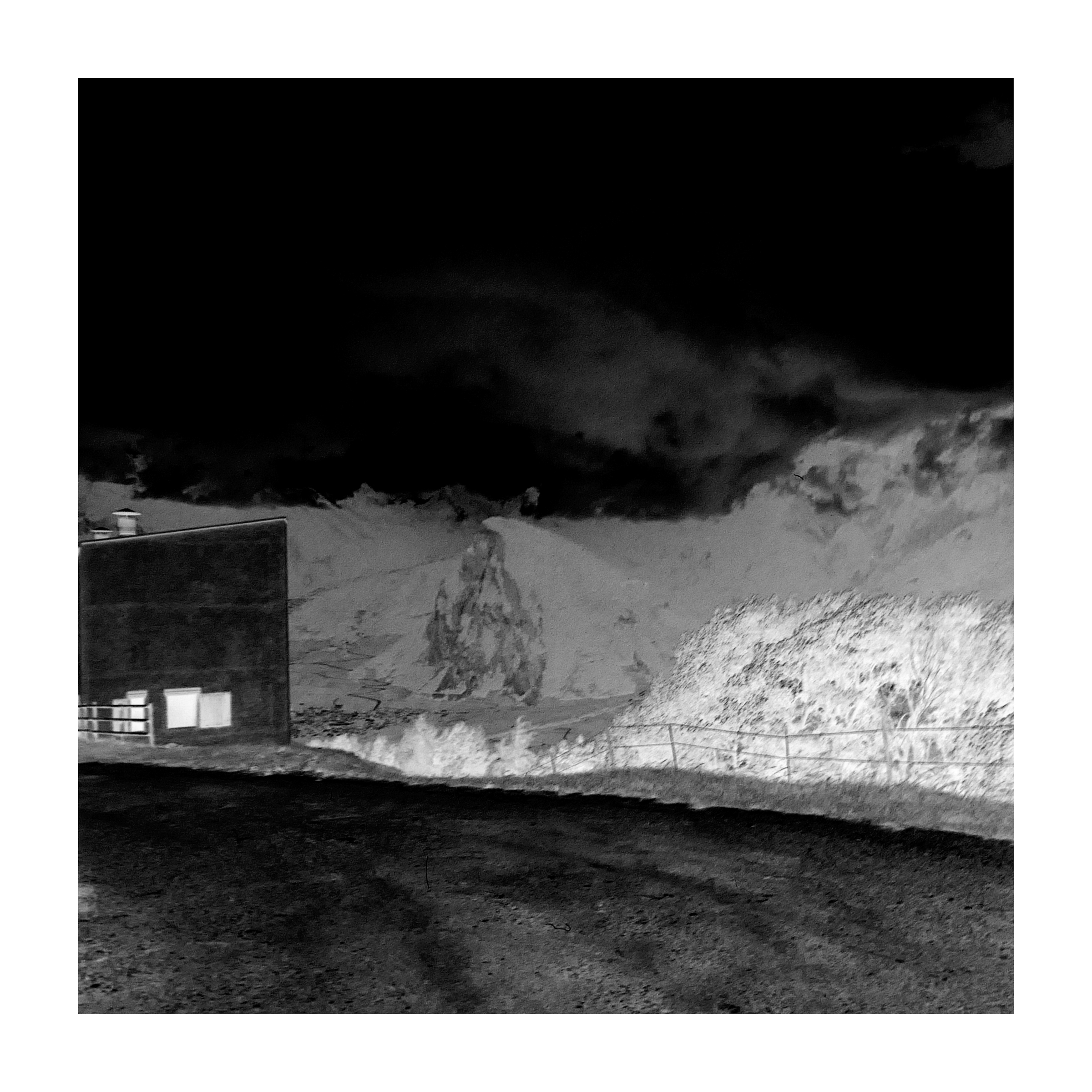
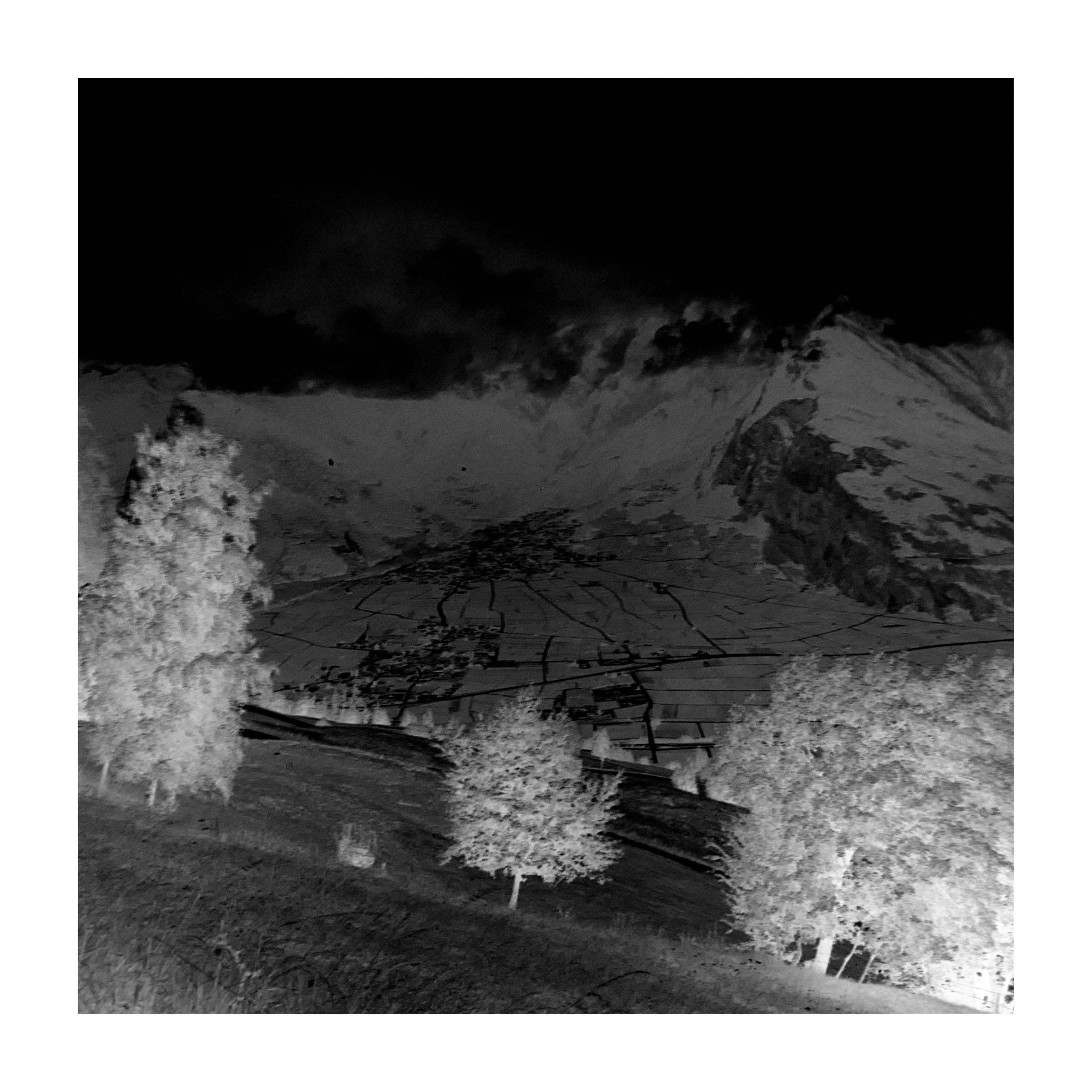
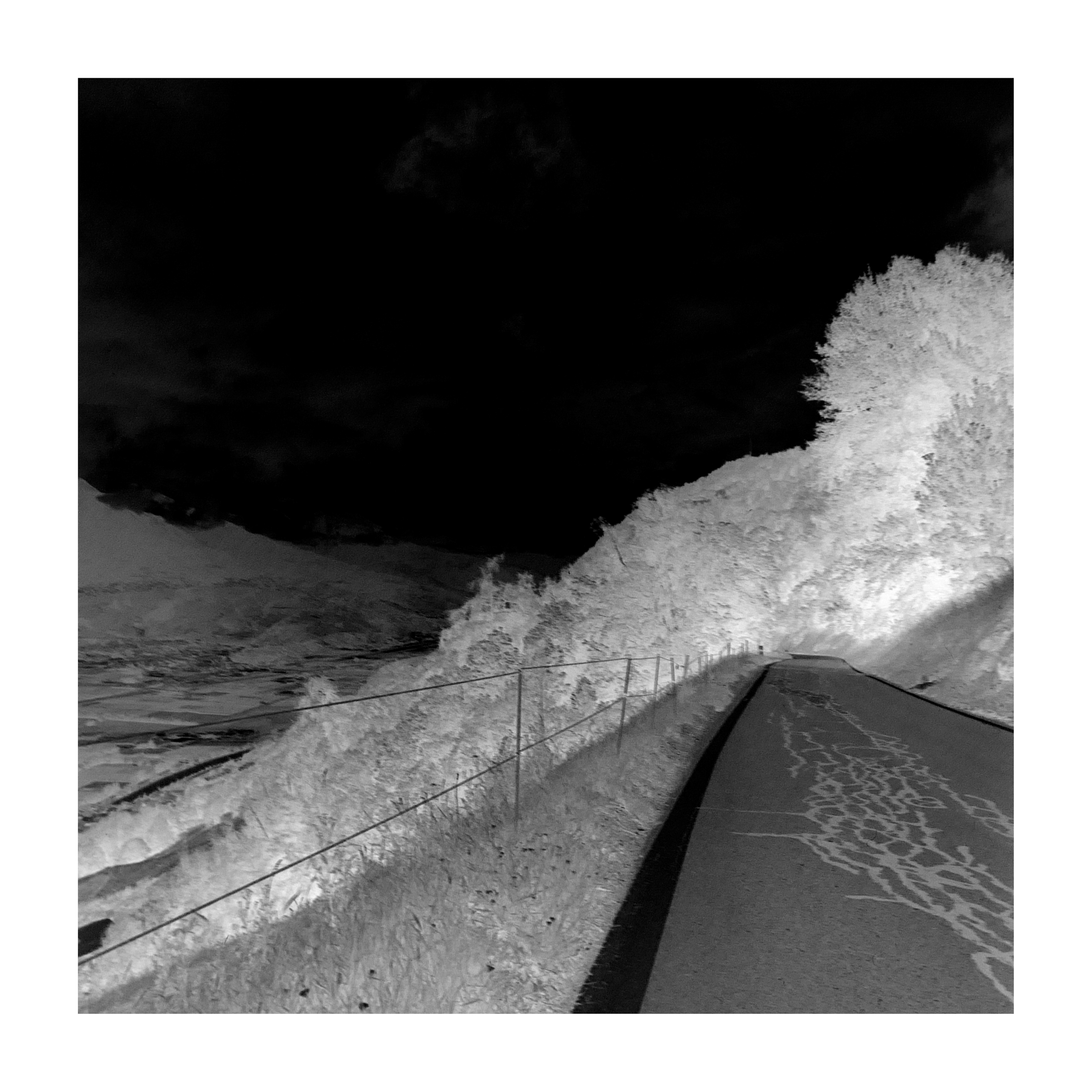
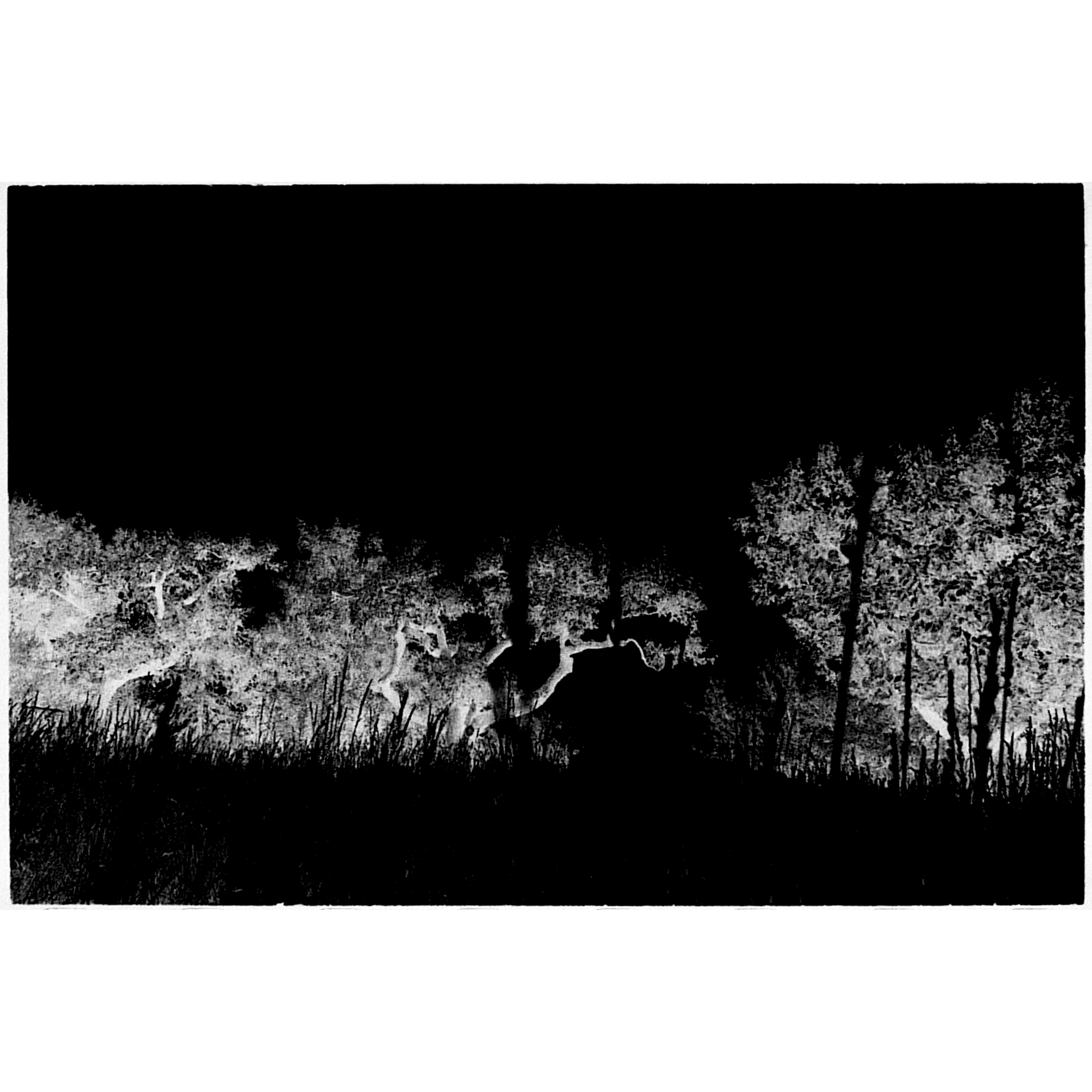
The second investigation developed through photography and through the relationship between the negative and the positive image. Rather than considering the negative merely as an intermediate technical stage leading toward a finished photograph, the process allowed negative and positive to coexist. Light becomes dark; dark becomes light. What appears to recede can suddenly advance. Recognition remains possible, but visual certainty becomes unstable. This inversion gradually led toward the idea of “la nuit en plein jour”—night existing within daylight—and to the poetic territory associated with Louis Aragon. Here, photography becomes less concerned with recording what was in front of the camera than with questioning the conditions through which something becomes visible. The sequence eventually developed into a leporello, a particularly appropriate form for this investigation. Opening the book produces a succession rather than a single fixed image. Positive and negative can answer one another across folds; an image disappears as another appears. The book therefore introduces something essential: seeing becomes temporal. One does not simply look at the photograph. One travels through it.
III — The Empty Negative: Accident as an Image
The third body of work began with an accident. A medium-format negative emerged apparently empty. Ordinarily this would be understood as failure: a photograph in which the expected image had disappeared. But instead of discarding the film, the absence became a surface upon which another process could begin. Watercolour was introduced into the empty photographic space. At this moment, two fundamentally different ways of producing an image encounter one another. Photography normally depends upon light leaving a physical trace through exposure. Watercolour depends upon the hand depositing pigment upon a surface.
-One records.
-The other intervenes.
Yet in these works neither medium remains completely itself. The failed photograph provides the structure for painting, while painting occupies the place where photographic information should have existed. The accident therefore does not need to be repaired. It becomes the condition from which the work is made. From Material to Thought Seen together, these three experiments reveal a common structure within the residency.Charcoal encounters the resistance and transparency of paper.
Photography encounters its own reversal through positive and negative. The empty negative encounters painting. In each case, the work begins in one medium and arrives somewhere slightly different.
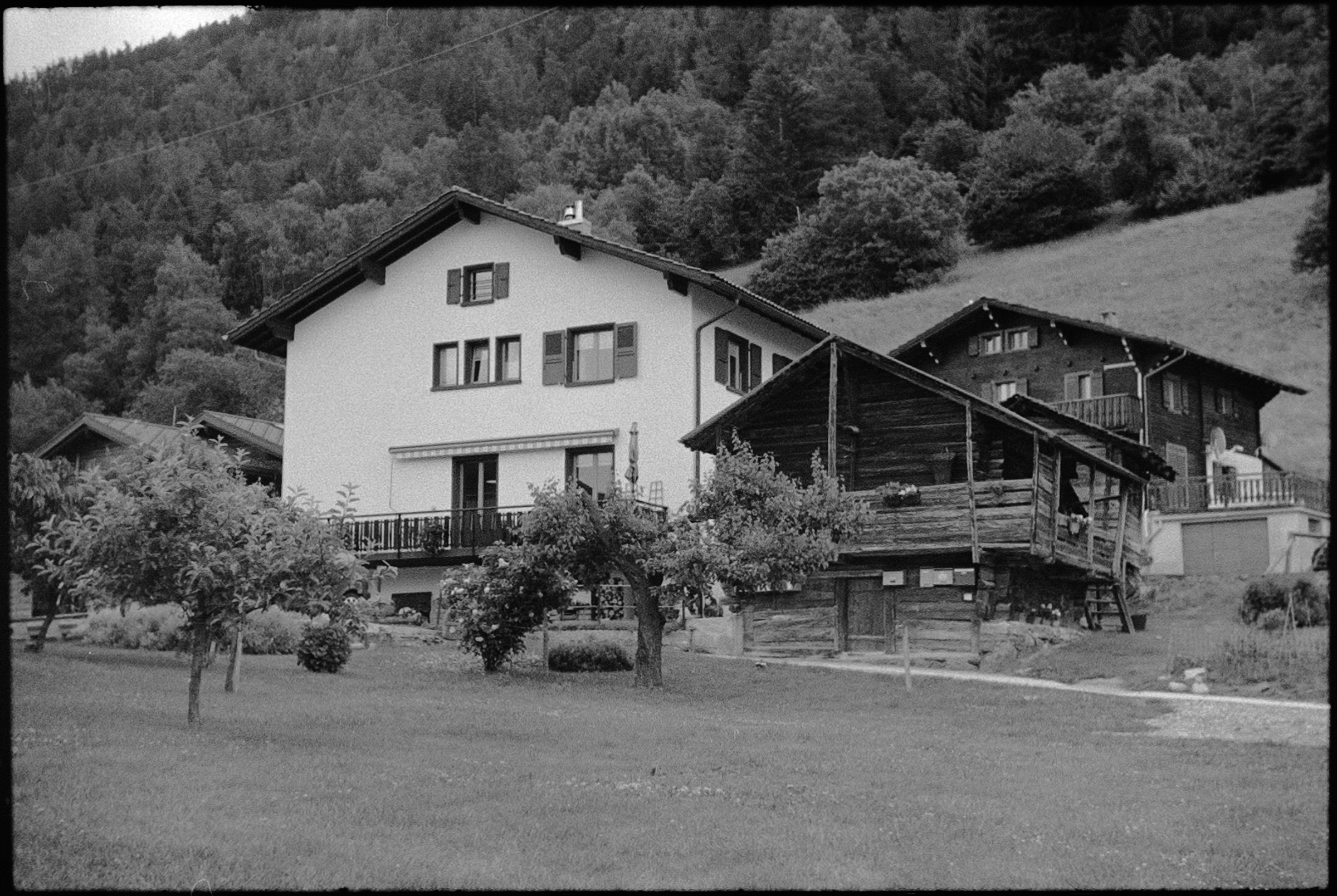
Atelier leZ-Arts, Les Condémines, Switzerland, July 2021
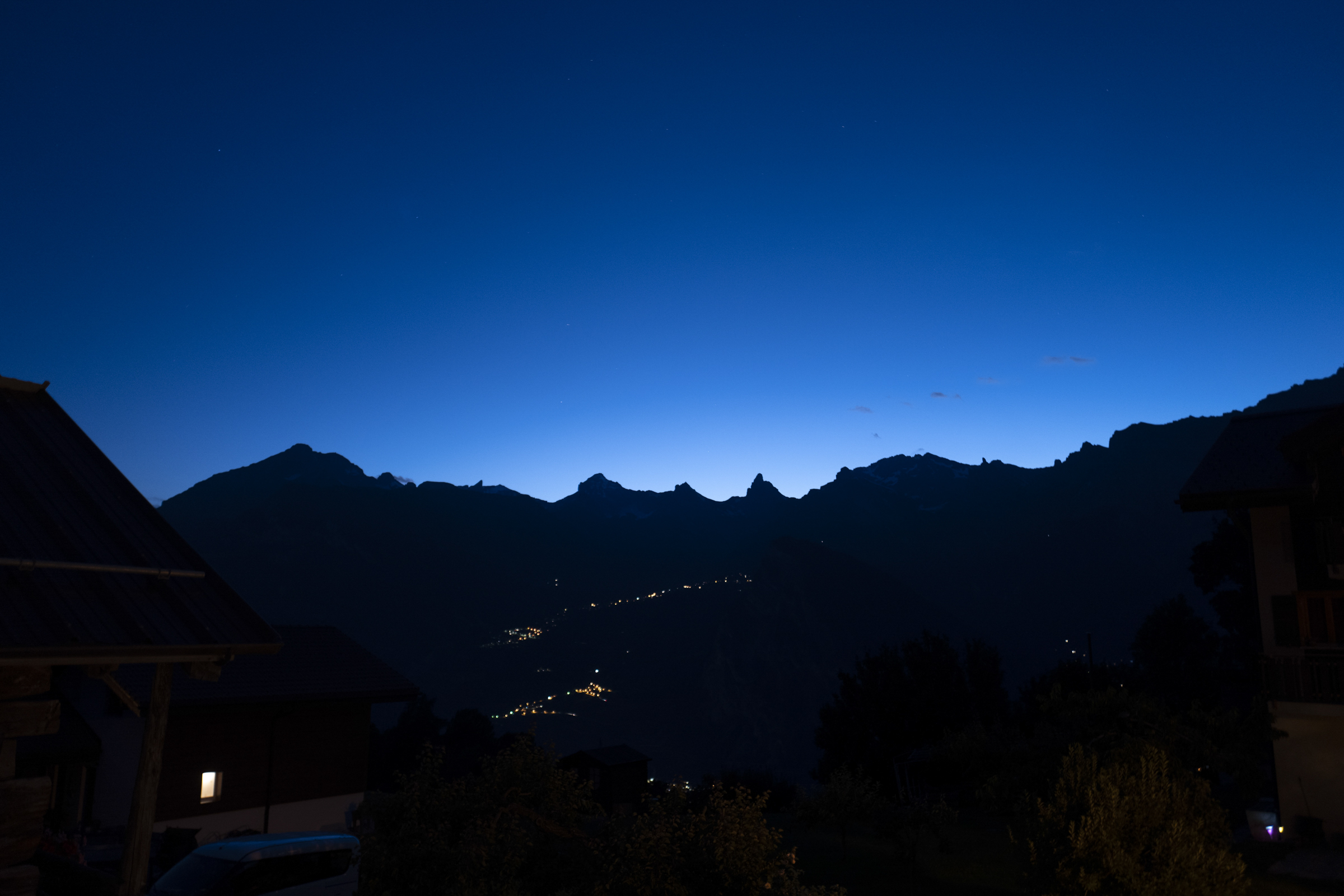
Night view from atelier lesZ Art
Siripoj Chamroenvidhya
Poétique des ombres et lumières :
du dessin à la photographie argentique
Siripoj Chamroenvidhya pratique le dessin depuis de nombreuses années, une technique qu’il maîtrise d’ailleurs à la perfection. Ses œuvres, souvent de grands formats, déroulent des univers en blanc et noir, suggérant paysages ou panoramas de contrées inconnues que l’on pourrait qualifier de paysages intérieurs plus que de véritables représentations paysagères, d’ailleurs n’est-il pas vrai que : « Tous les bons dessinateurs dessinent d’après l’image écrite dans leur cerveau et non d’après nature » ? (Baudelaire, L’Art mnémonique)
Parmi les différentes techniques graphiques, Siripoj privilégie celle du fusain qui se prête aux aplats et modelés, créant des volumes sans avoir recours aux traits. On entend par trait, ou ligne, un tracé continu et parfaitement lisible permettant de construire une forme. Les nombreuses révolutions artistiques ayant jalonné l’histoire des arts n’ont étrangement jamais remis en question l’hégémonie du trait, considéré encore aujourd’hui comme l’alpha et l’oméga du dessin. Il y eut pourtant quelques tentatives de se passer de cette composante fondamentale, en particulier avec Léonard de Vinci qui, dans son Traité de la Peinture, écrit : « Veille à ce que tes ombres et lumières se fondent sans traits ni lignes, comme une fumée ». Cette recommandation renvoie à la technique du sfumato – signifiant littéralement « enfumé » – qui lui permit d’abolir les contours et de simuler la profondeur et le volume. Plus tard, les découvertes sur la perception des couleurs théorisées par M.-E. Chevreul dans son ouvrage De la loi du contraste simultané, paru en 1839, tout comme les avancées de la photographie amènent certains impressionnistes et postimpressionnistes à travailler sur l’effacement des contours, grâce notamment aux techniques de la touche fragmentée et du pointillisme. Les pastels et fusains de Degas montrent par exemple la volonté de créer des formes sans recourir à l’artificialité de la ligne, les dessins noirs et blancs de Georges Seurat offrent pour leur part une science parfaite des valeurs d’ombre et de lumière.
Clair-obscur et dessin sans trait sont au coeur du système graphique de Siripoj Chamroenvidhya ; l’artiste joue sur la densité de matière carbone ou graphite déposée sur le papier pour révéler les passages du négatif au positif et du positif au négatif, orchestrant dans le même temps la répartition des pleins et des vides régulant l’éclairage. Dans une sorte de geste automatique, rappelant le procédé surréaliste du frottage, l’artiste dessinant interroge les conditions d’apparition des images qui surgissent de façon aléatoire sur le support. Parlons précisément de ce support et de son format ; Siripoj utilise fréquemment du papier calque dont les propriétés de transparence accentuent les effets optiques et luminescents. Le calque, conditionné en rouleau, induit une forme de « lecture » de l’œuvre dessinée, réflexe assez naturel puisque le rouleau est une forme primitive du livre. La peinture chinoise montée sur rouleau est d’ailleurs éminemment révélatrice de cette nature littéraire qui participe, en outre, à estomper les frontières entre poésie, calligraphie et peinture. Sur un plan mécanique, l’opération de déroulement entraîne une motricité de l’œil et du geste, voire même du corps entier. Cette dynamique, modifie les angles de vision et les points de vue, mais agit aussi puissamment sur la temporalité, en effet la découverte de la composition se réalise progressivement, par séquences, comme dans un poème ou un film. Au fil du rouleau, l’œil chemine au gré des variations graphiques surgies de l’ombre révélant la beauté suggestive de l’image négative. Se dévoile alors subrepticement la proximité que ces dessins entretiennent avec la photographie argentique.
Pour Siripoj Chamroenvidhya, qui réalise lui-même le développement des pellicules et les tirages sur papier, la photographie en noir et blanc représente une autre façon de penser et d’habiter l’image. Certes, il reste avant tout un dessinateur, mais après tant d’années d’activité dans le strict domaine graphique, il a ressenti le besoin d’élargir son champ d’action afin de revitaliser son imaginaire et ses moyens d’expression. Autre élément décisif ; grâce à son détachement des règles académiques, qui a contrario pèsent lourdement sur les arts visuels conventionnels, la photographie parvient à brouiller les frontières entre genres et méthodes de représentations. Rapidité et efficacité d’exécution, libération de postulats esthétiques pesants, choix de ses propres angles de vision, cadrages et effets de lumière, vont favoriser le redéploiement du travail de Siripoj dans de nouvelles configurations visuelles et spatiales qui, désormais, mêlent étroitement dessin et photographie. Ainsi les combinaisons opérées récemment par l’artiste entre ces deux genres en créent-ils peut-être un troisième ? Un genre hybride qu’aucun terme ne désigne encore, entre naturalisme et abstraction, modernité et académisme, mais où s’exprime la volonté de dessiner ce que l’on ne peut photographier et de photographier ce que l’on ne peut dessiner.
Françoise-Hélène Brou
Condémines, le 8 août 2021
I — Drawing: Charcoal, Transparency and Duration
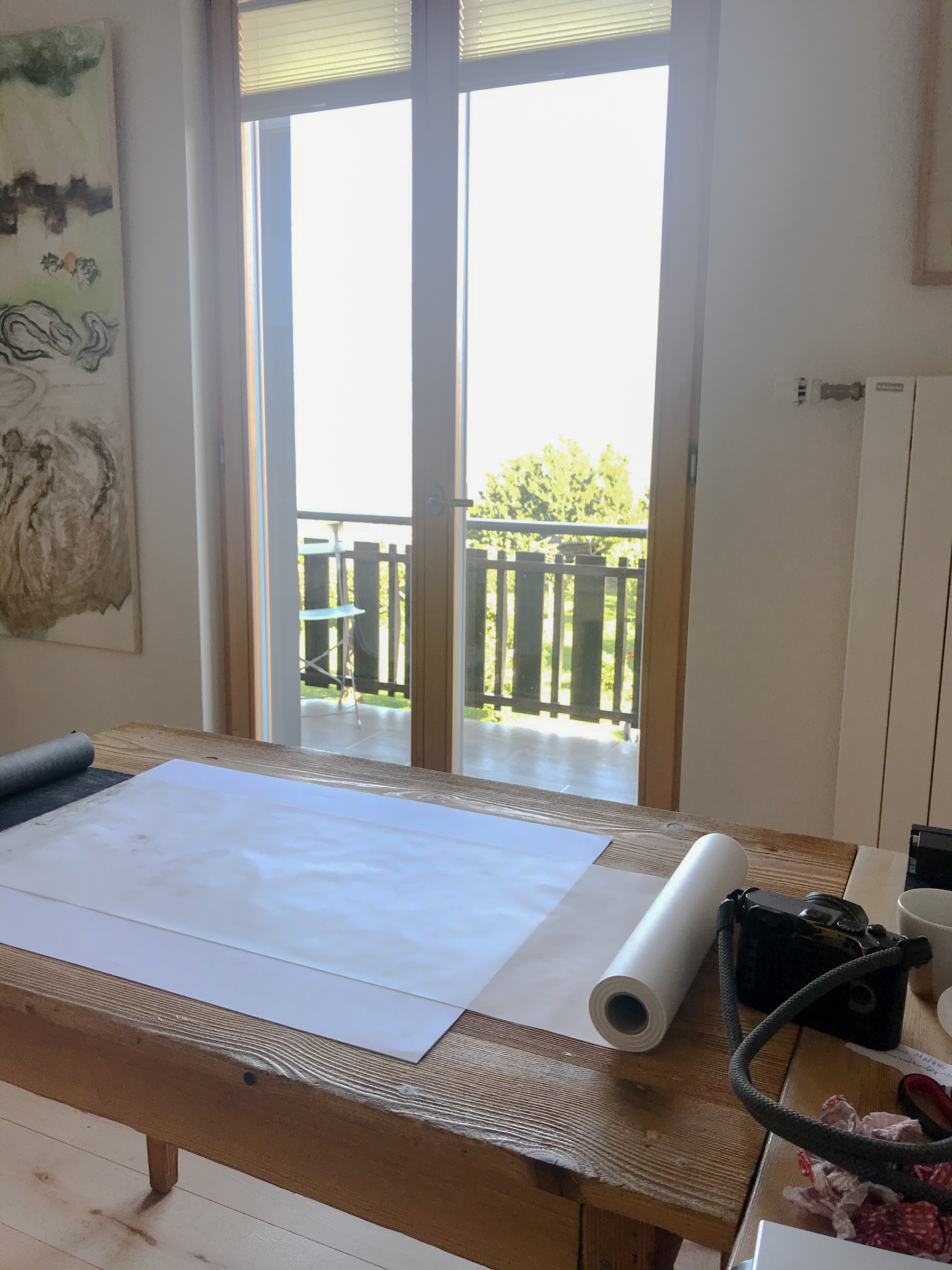
Artist in Residence, Atelier leZ-Arts, Les Condémines, July 2021
tracing paper (papier calque) — roll approximately 30 cm high × 50 m long
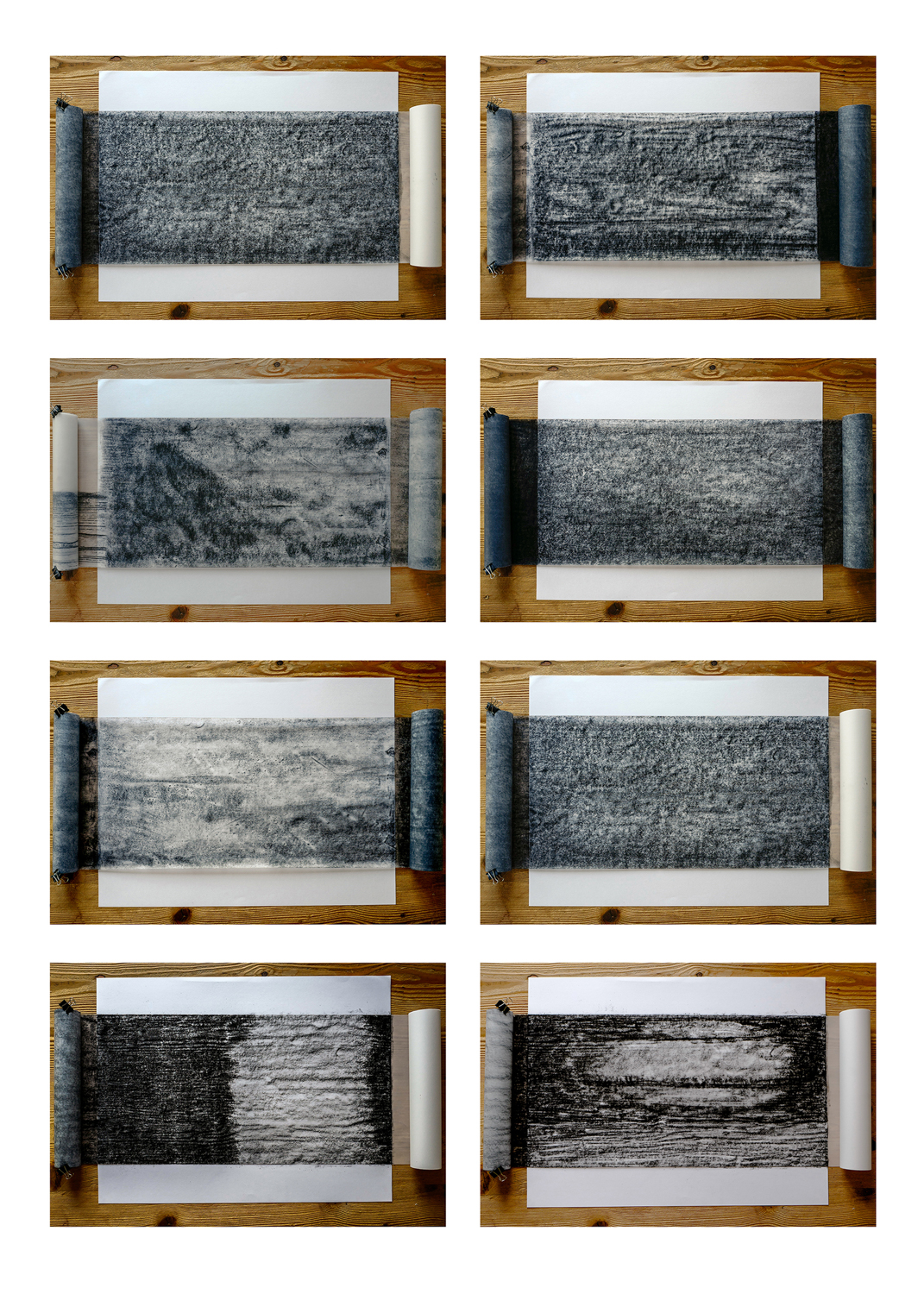
Charcoal Roll — Drawing as Duration
Compressed charcoal / frottage on tracing paper (papier calque) — roll approximately 30 cm high × 50 m long
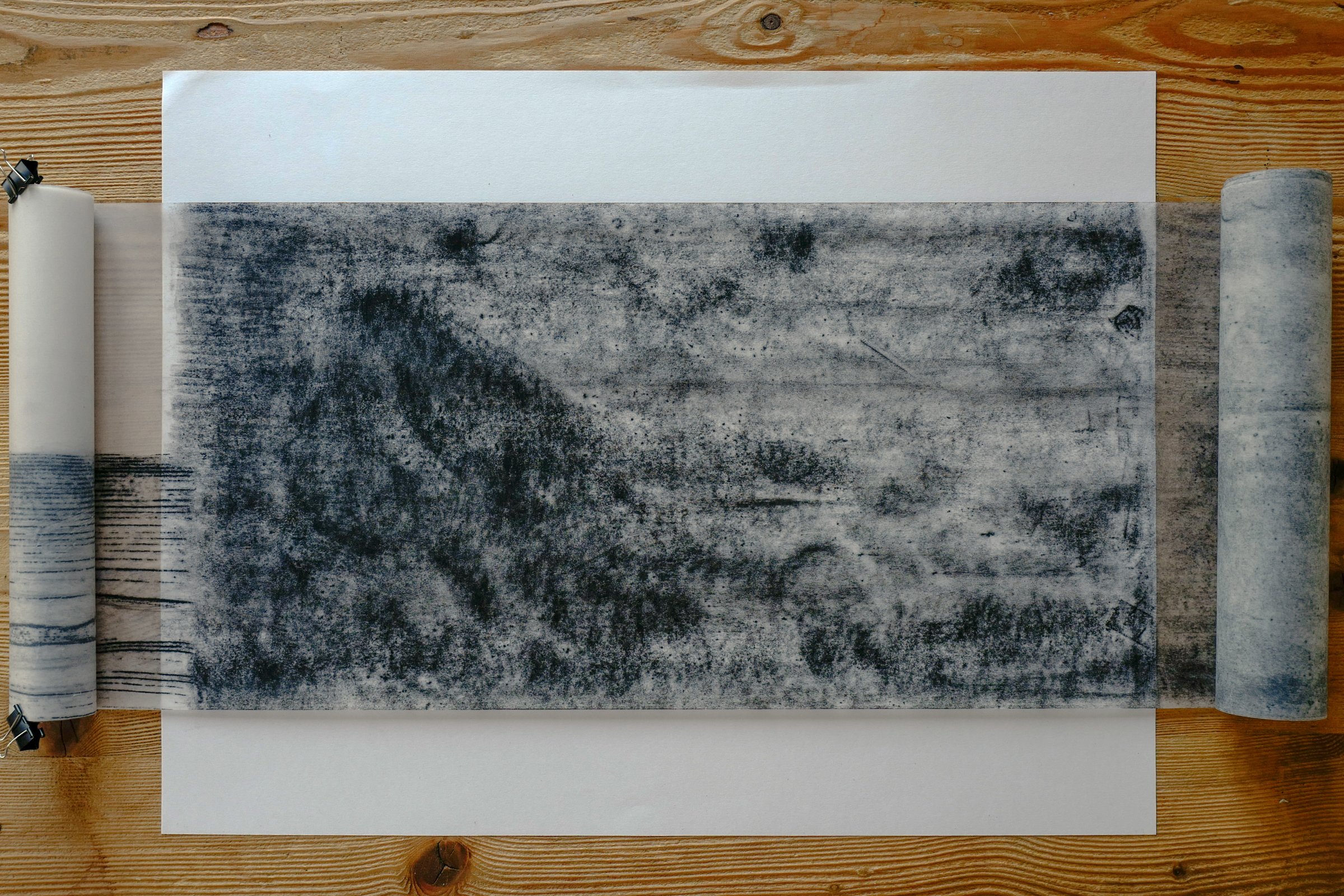
A fragment of compressed charcoal / frottage on tracing paper — roll approximately 30 cm high × 50 m long
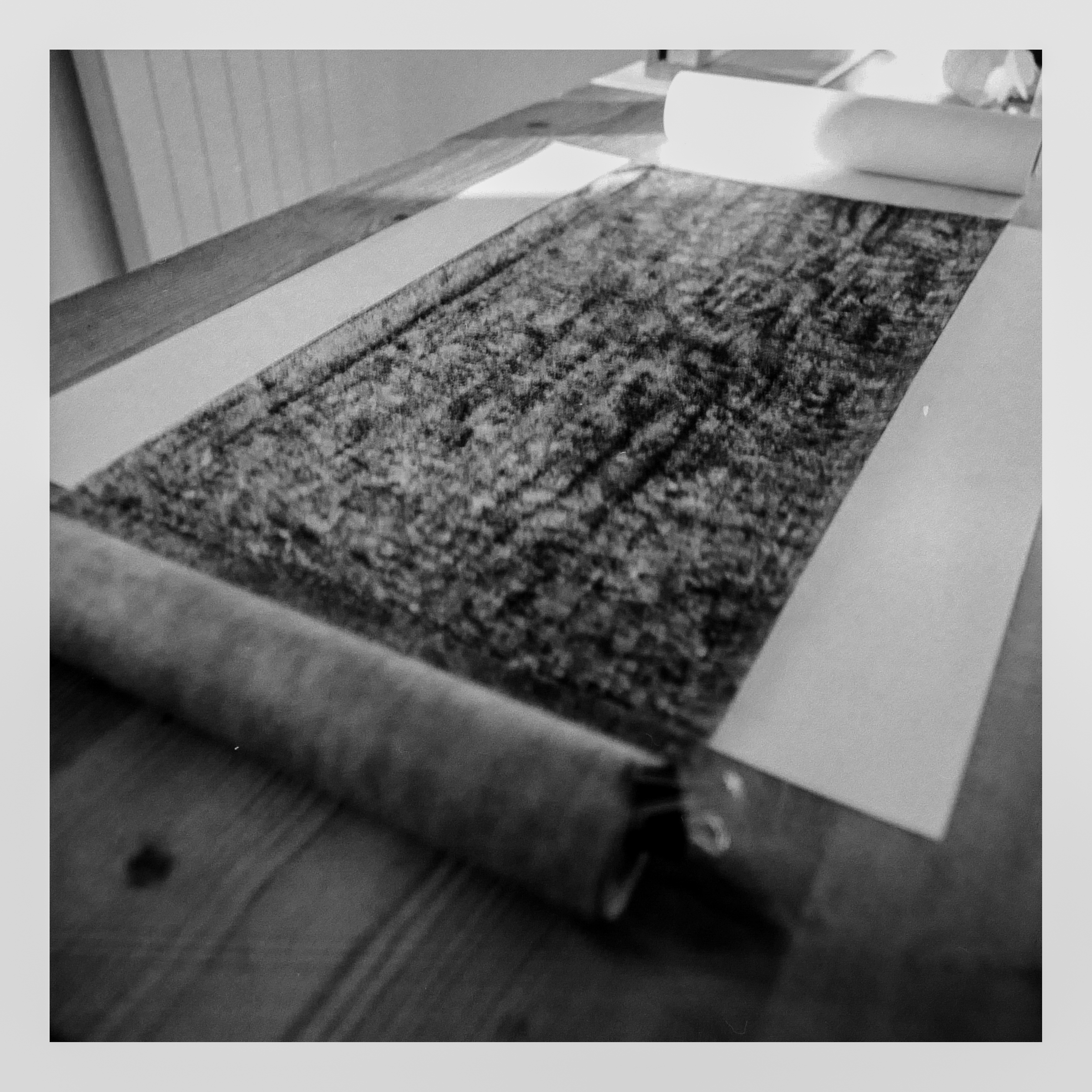
A fragment of compressed charcoal / frottage on tracing paper — roll approximately 30 cm high × 50 m long
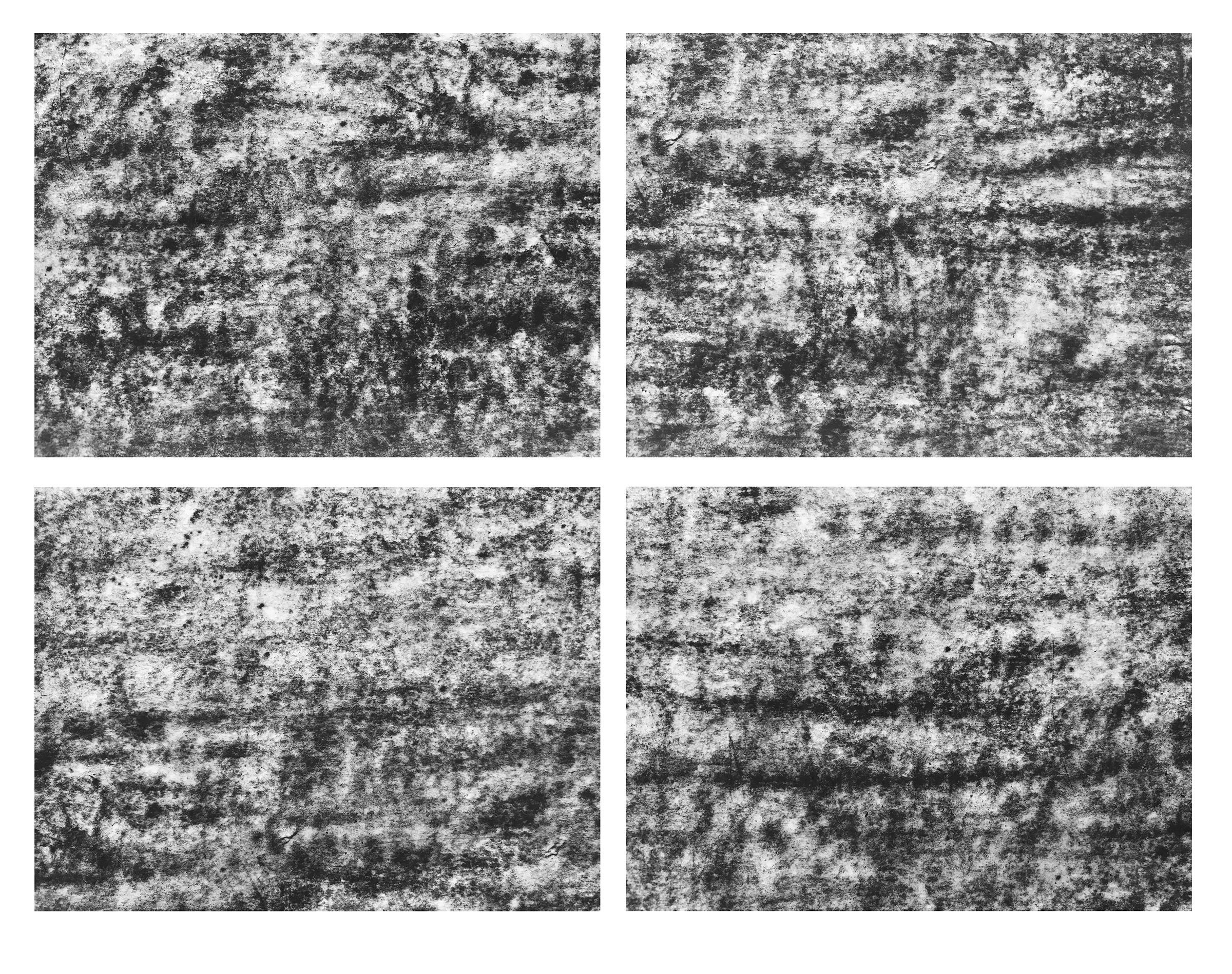
Details of a compressed charcoal quadriptych
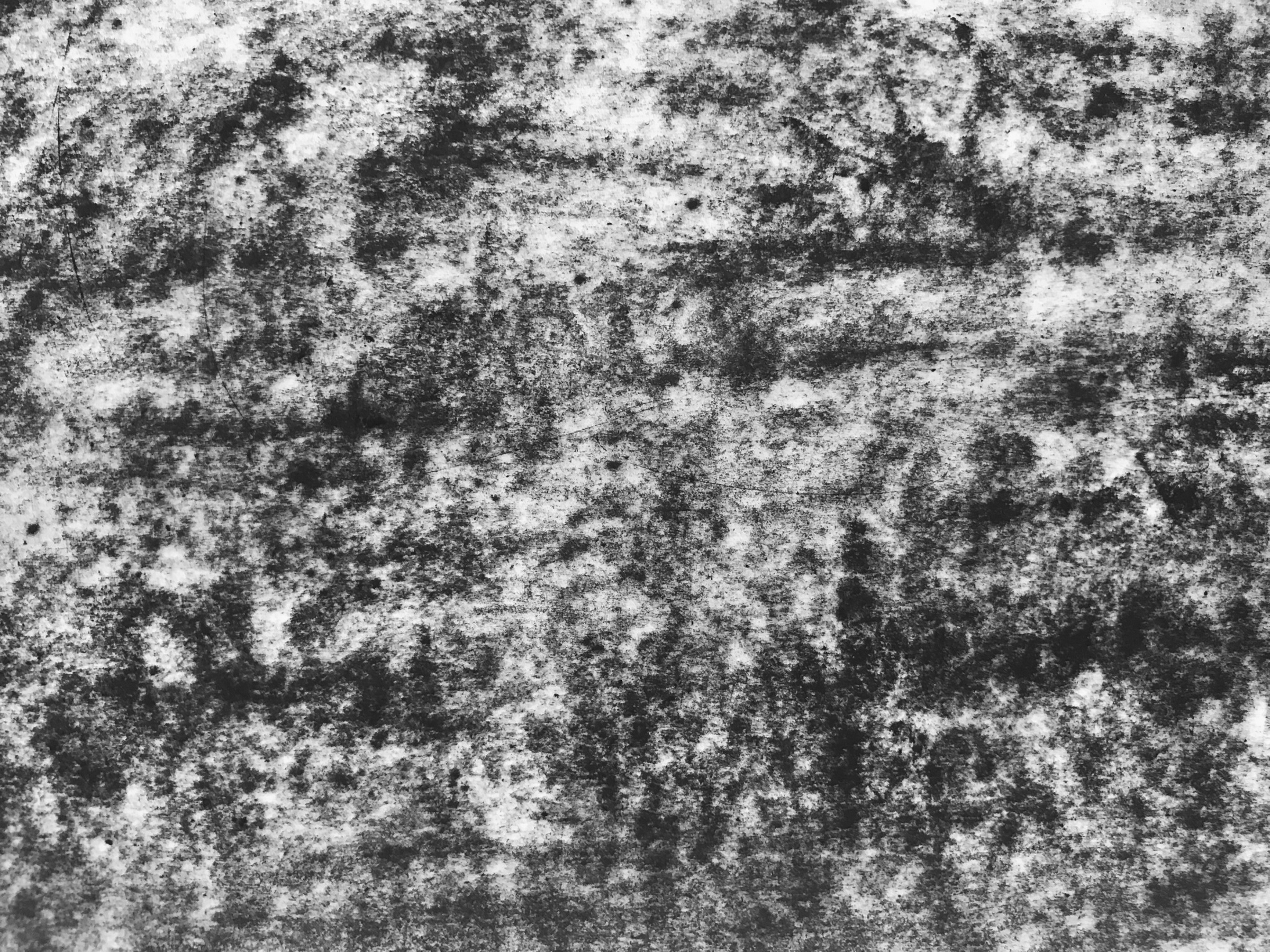
Detail of a compressed charcoal
.
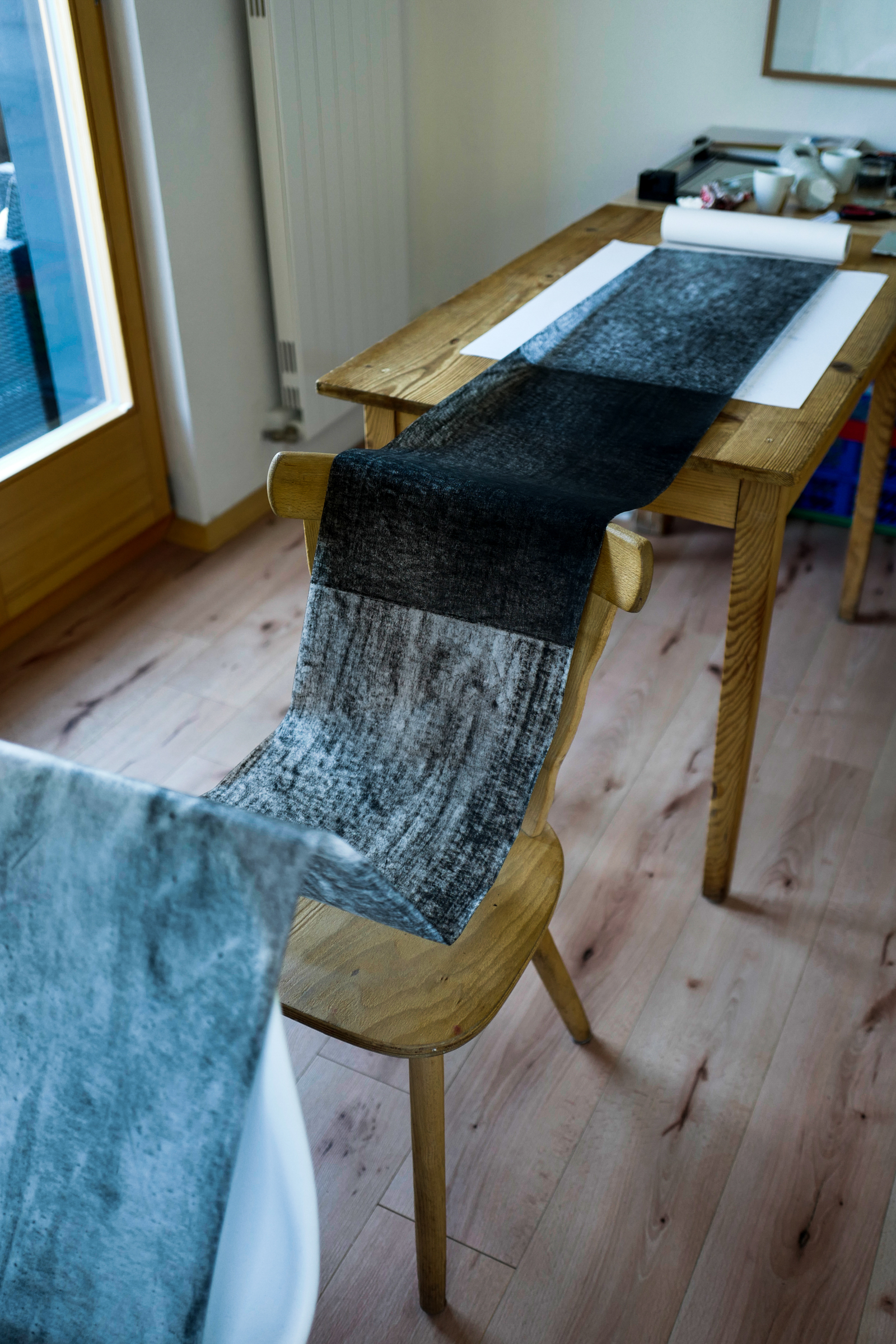
Work in progress at Studio leZ Art, 2021
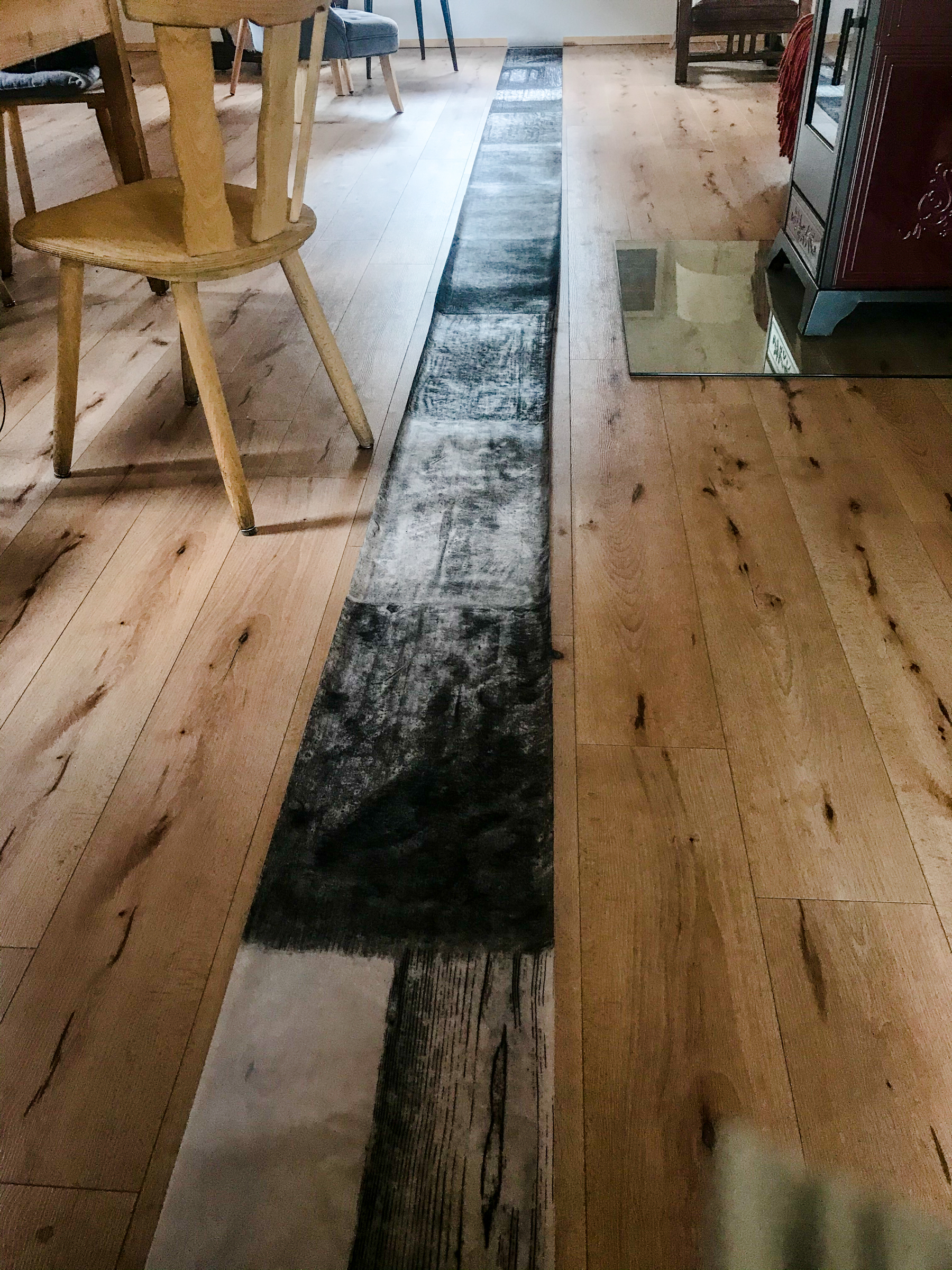
Installation view at the Studio leZ Art, 2021
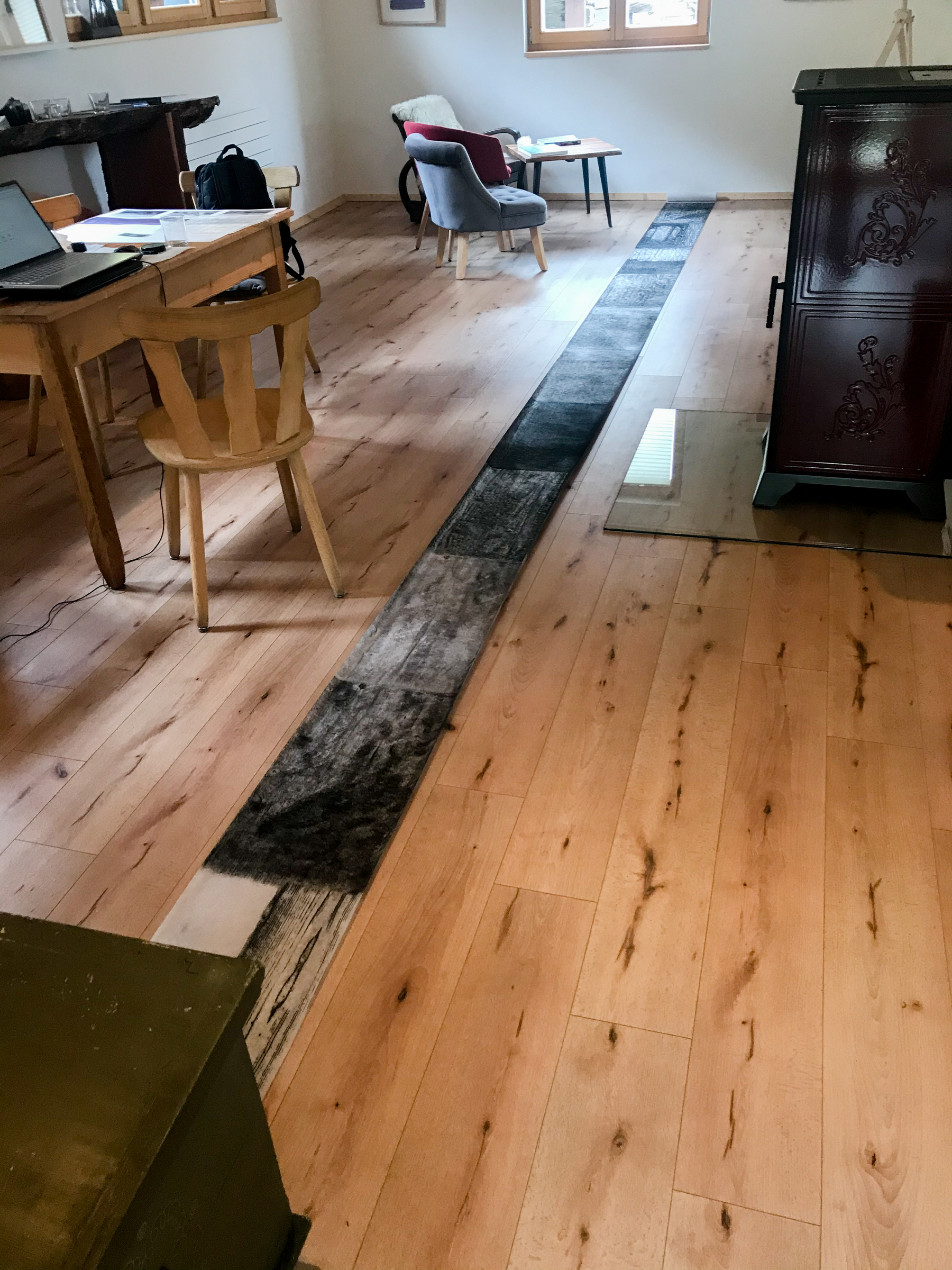
View of the studio leZ-Art, les Condémine, Nendaz, 2021
II — Photography: Positive / Negative — La nuit en plein jour
The second investigation developed through photography and through the relationship between the negative and the positive image. Rather than considering the negative merely as an intermediate technical stage leading toward a finished photograph, the process allowed negative and positive to coexist. Light becomes dark; dark becomes light. What appears to recede can suddenly advance. Recognition remains possible, but visual certainty becomes unstable. This inversion gradually led toward the idea of “la nuit en plein jour”—night existing within daylight—and to the poetic territory associated with Louis Aragon. Here, photography becomes less concerned with recording what was in front of the camera than with questioning the conditions through which something becomes visible. The sequence eventually developed into a leporello, a particularly appropriate form for this investigation. Opening the book produces a succession rather than a single fixed image. Positive and negative can answer one another across folds; an image disappears as another appears. The book therefore introduces something essential: seeing becomes temporal. One does not simply look at the photograph. One travels through it.
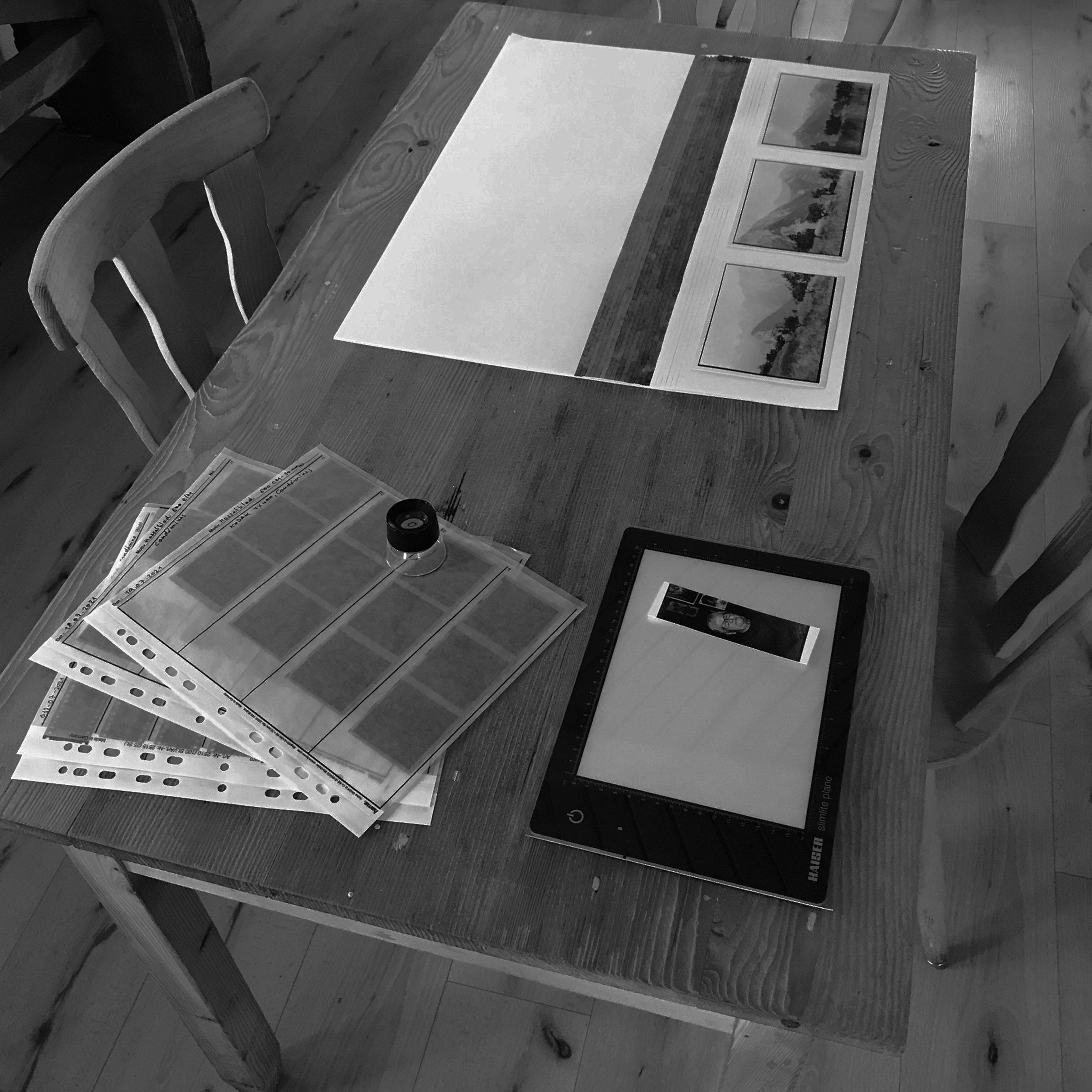
The working table becomes a temporary laboratory where different states of the photographic image coexist. Medium-format negatives, a magnifying loupe, photographic prints and a light box are placed together as elements of an ongoing investigation.
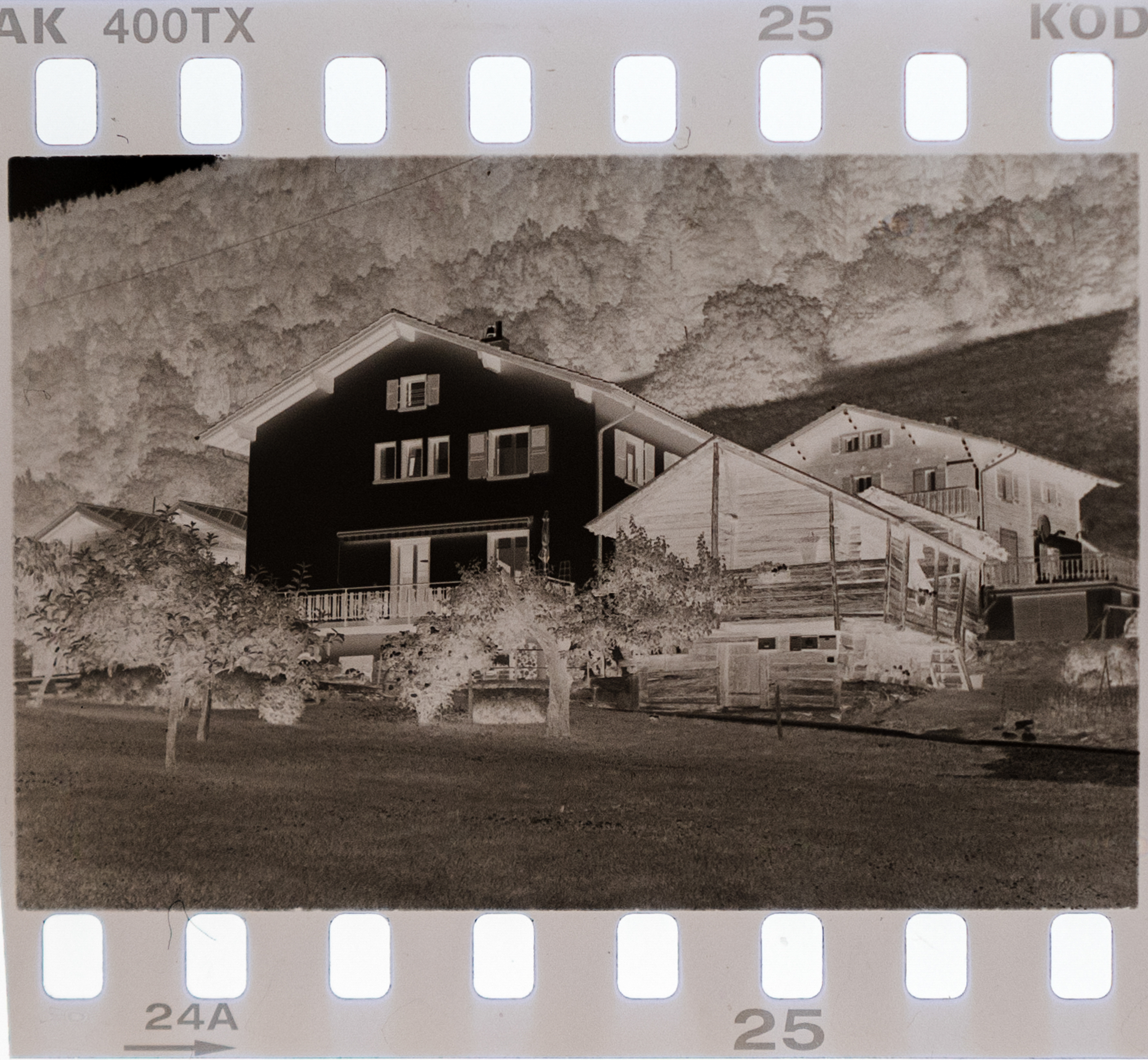
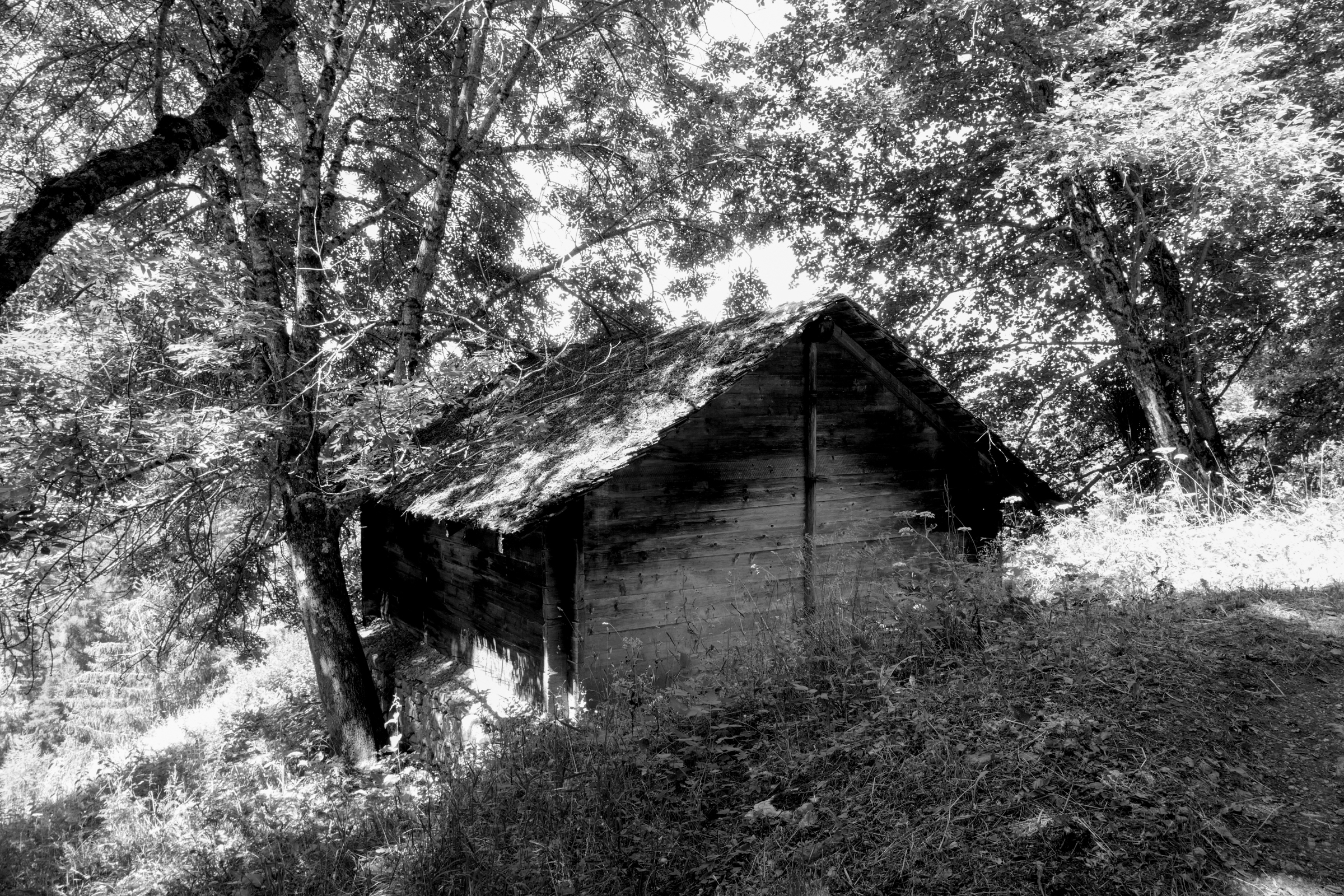
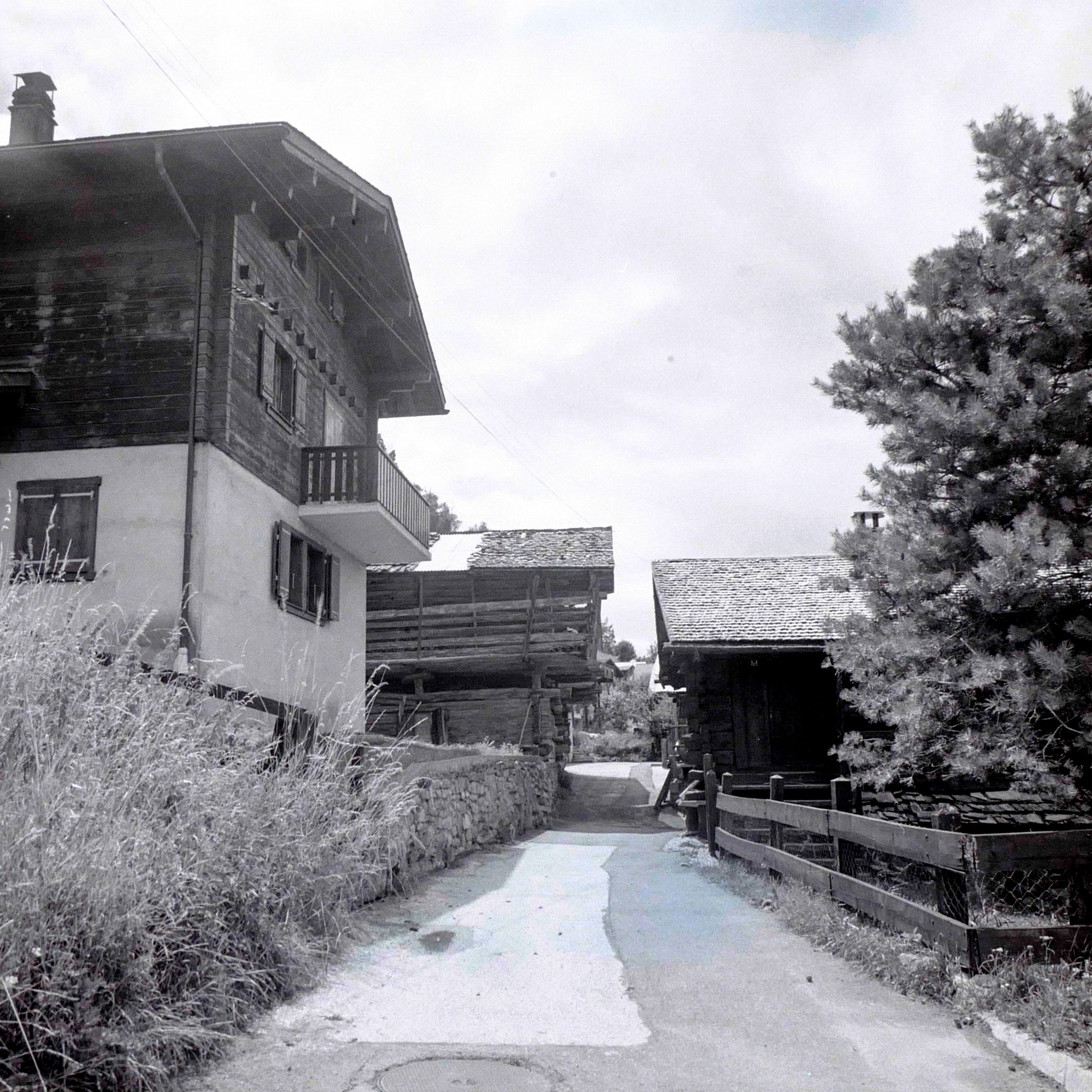
Atelier leZ-Arts, Les Condémines, Switzerland, on film KODAK TX 400, July 2021
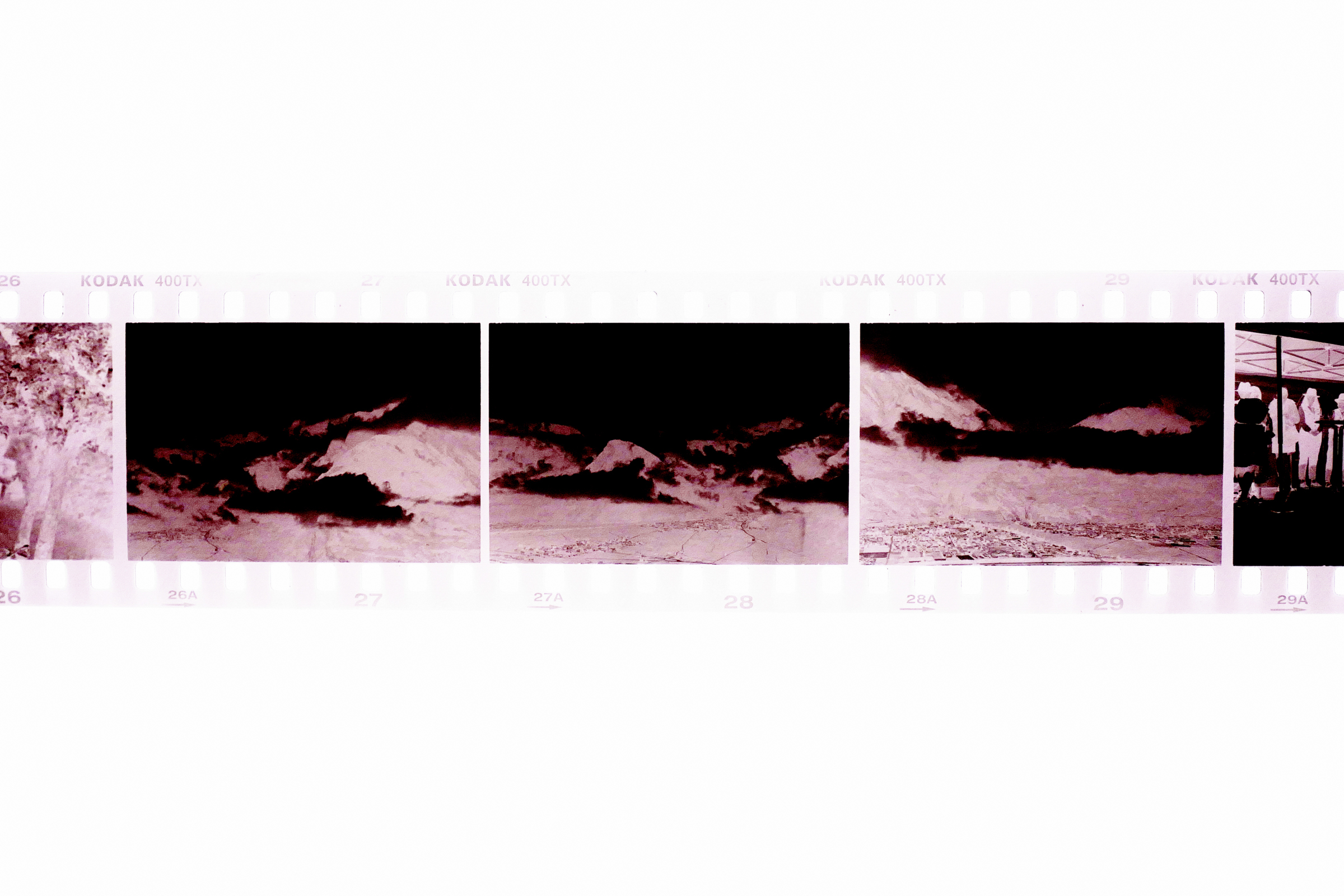
The landscapes behind studio leZ Art in negative. 2021
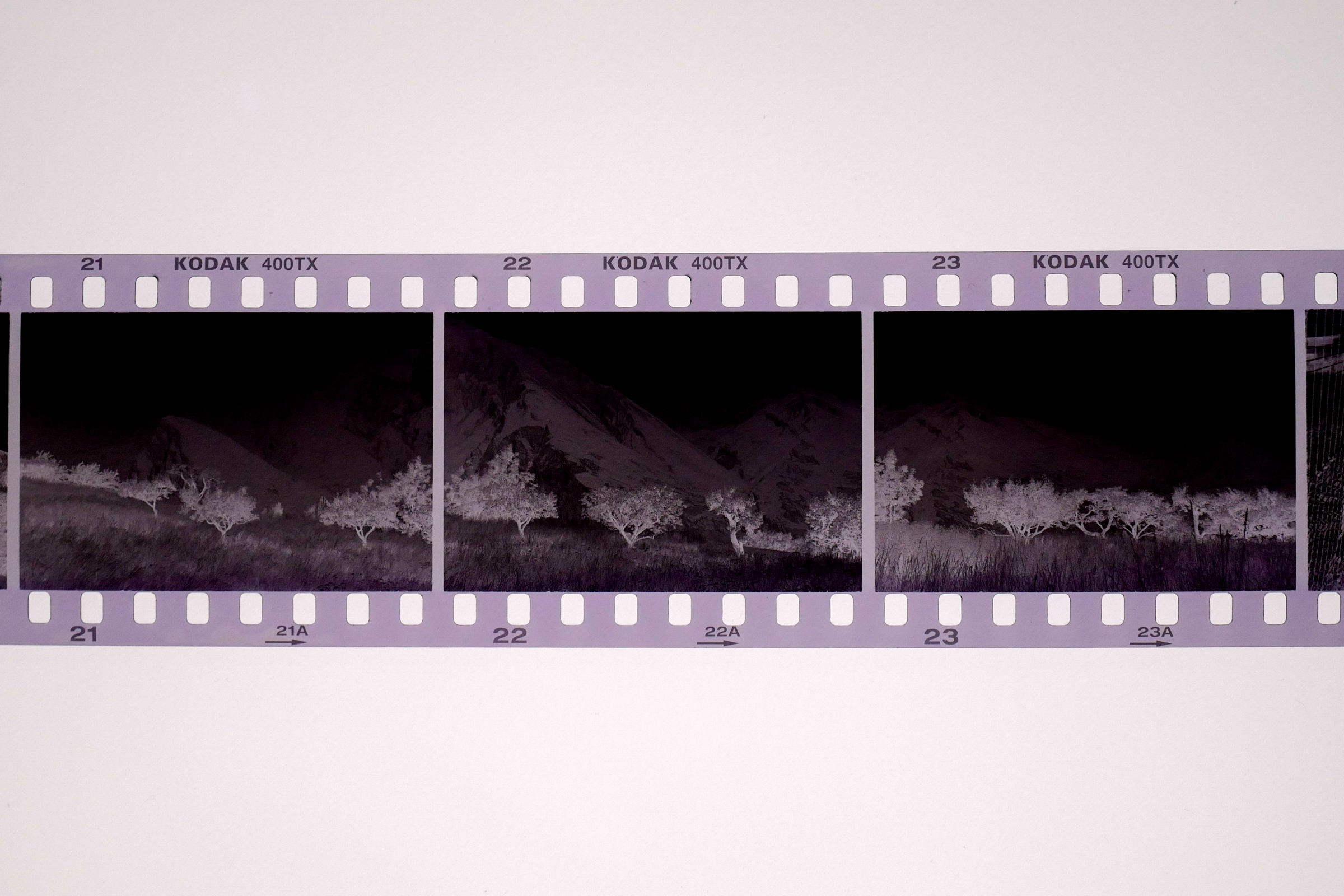
The landscapes in the garden behind studio leZ Art in negative. 2021
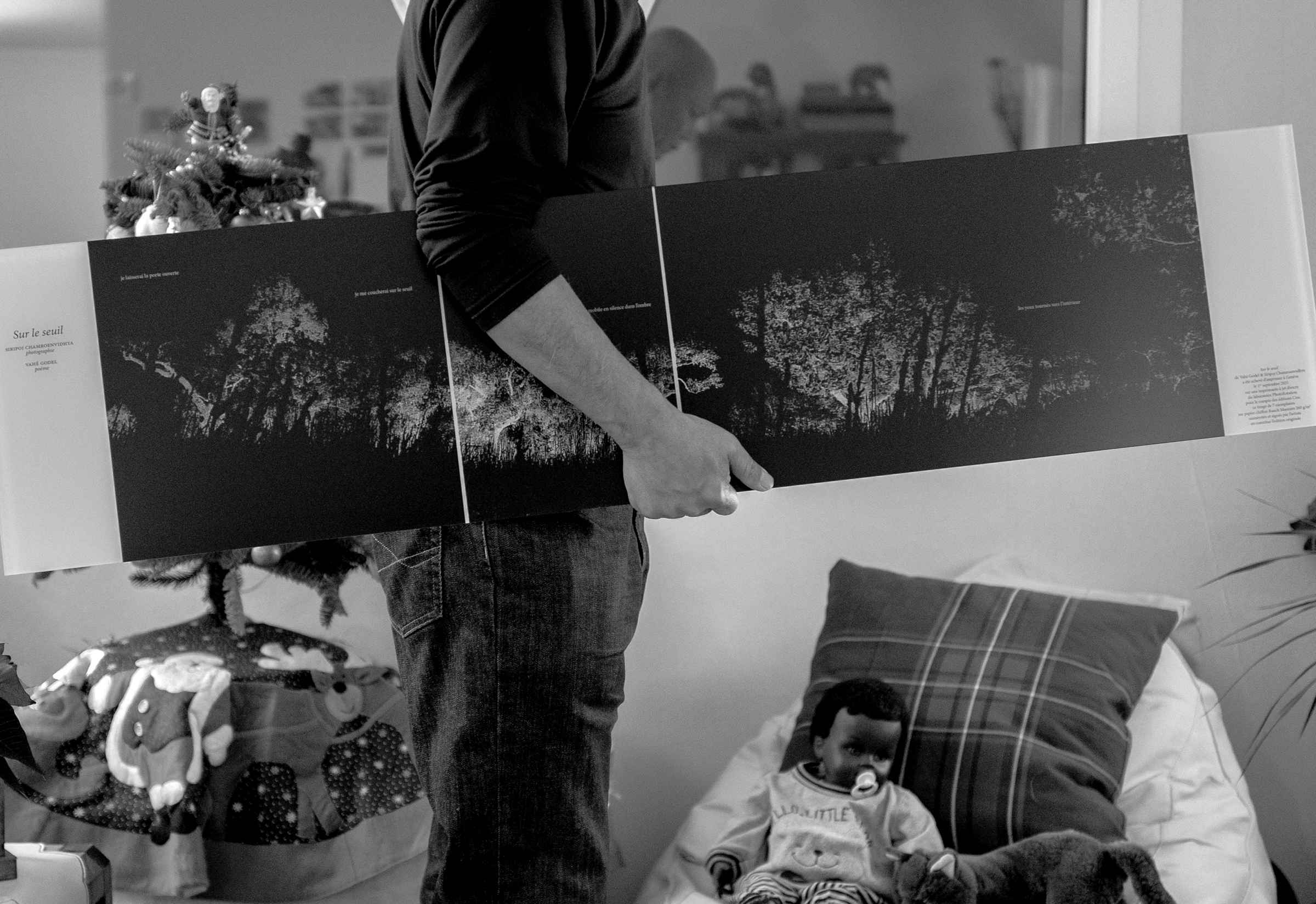
Unfolding the Threshold, 2021, Sur le seuil — Leporello, Siripoj Chamroenvidhya, photographs · Vahé Godel, poems
III — The Empty Negative: Accident as an Image
The third body of work began with an accident. A medium-format negative emerged apparently empty. Ordinarily this would be understood as failure: a photograph in which the expected image had disappeared. But instead of discarding the film, the absence became a surface upon which another process could begin. Watercolour was introduced into the empty photographic space. At this moment, two fundamentally different ways of producing an image encounter one another. Photography normally depends upon light leaving a physical trace through exposure. Watercolour depends upon the hand depositing pigment upon a surface.
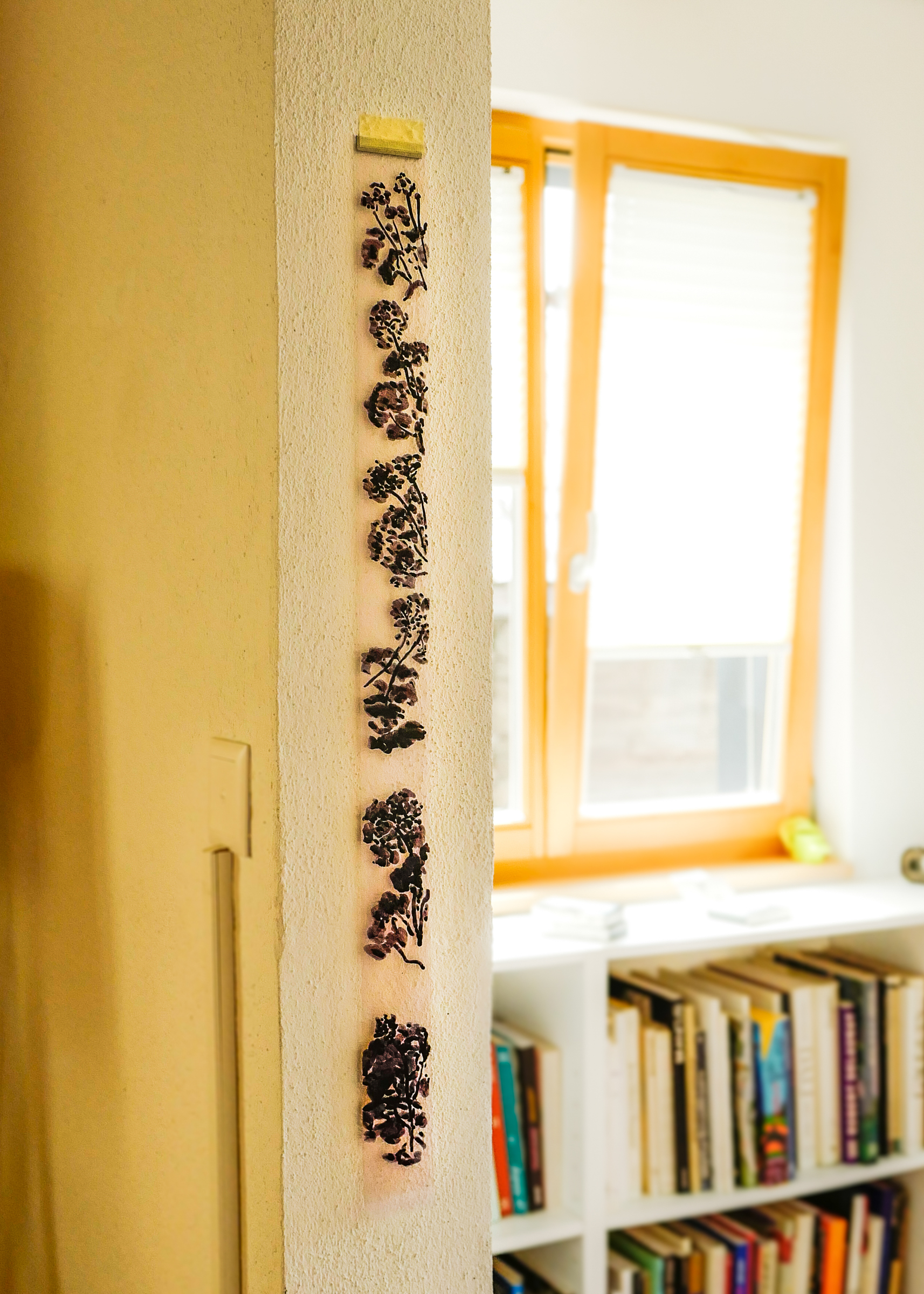
Where the Drawing Leaves the Paper
Artist in Residence, Atelier leZ-Arts, Les Condémines, Switzerland, July 2021.
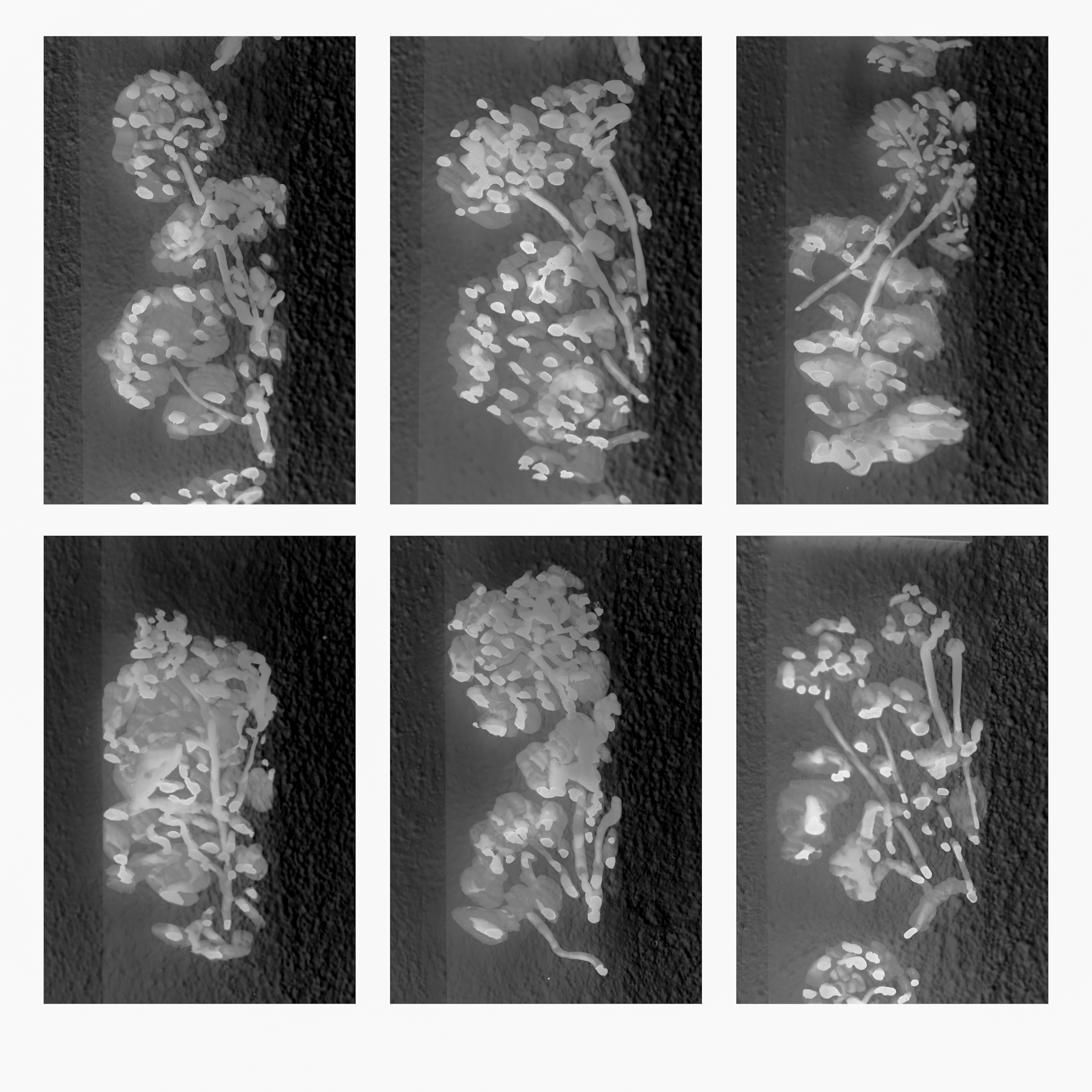
Six watercolor fragments on black-and-white film, Atelier leZ Art, 2021
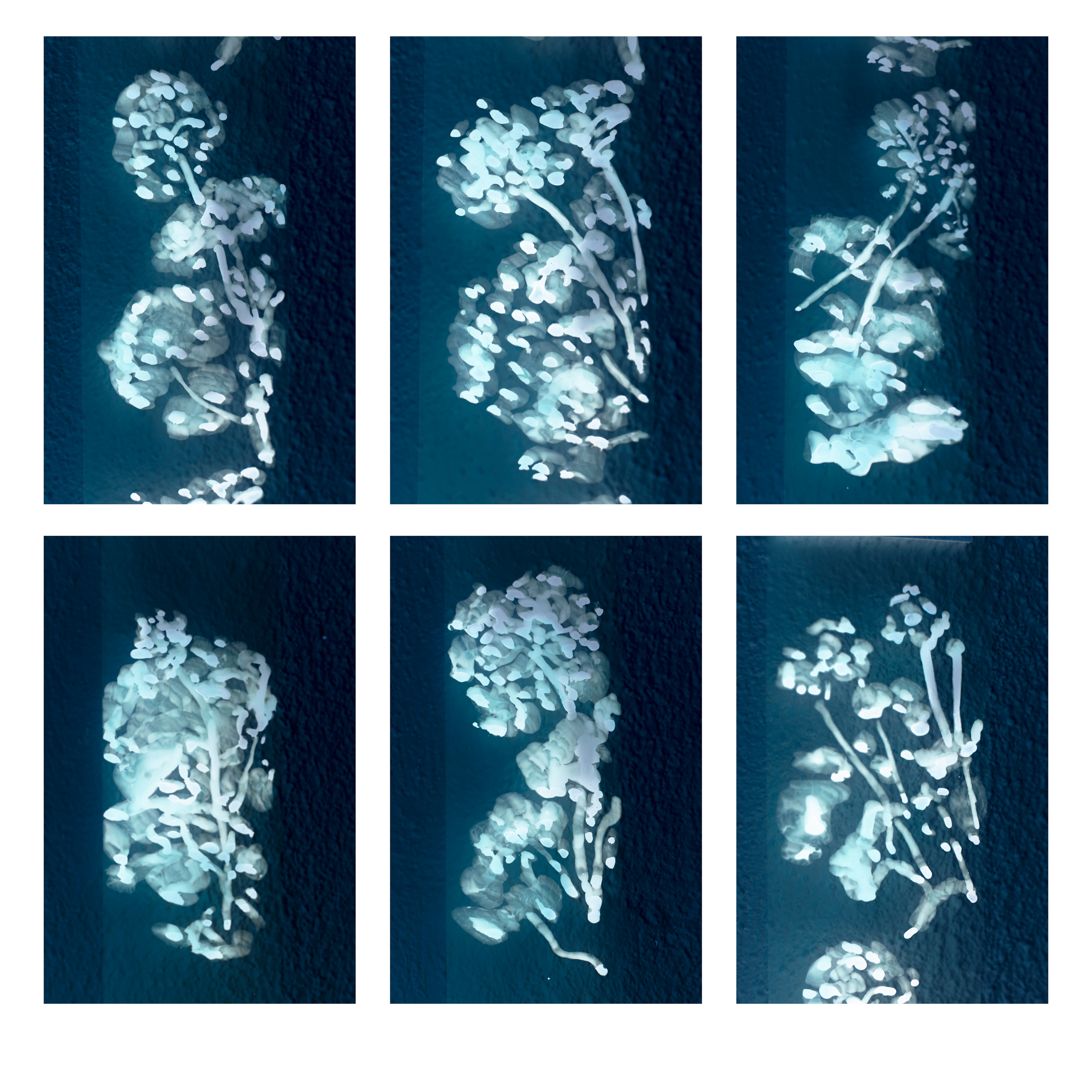
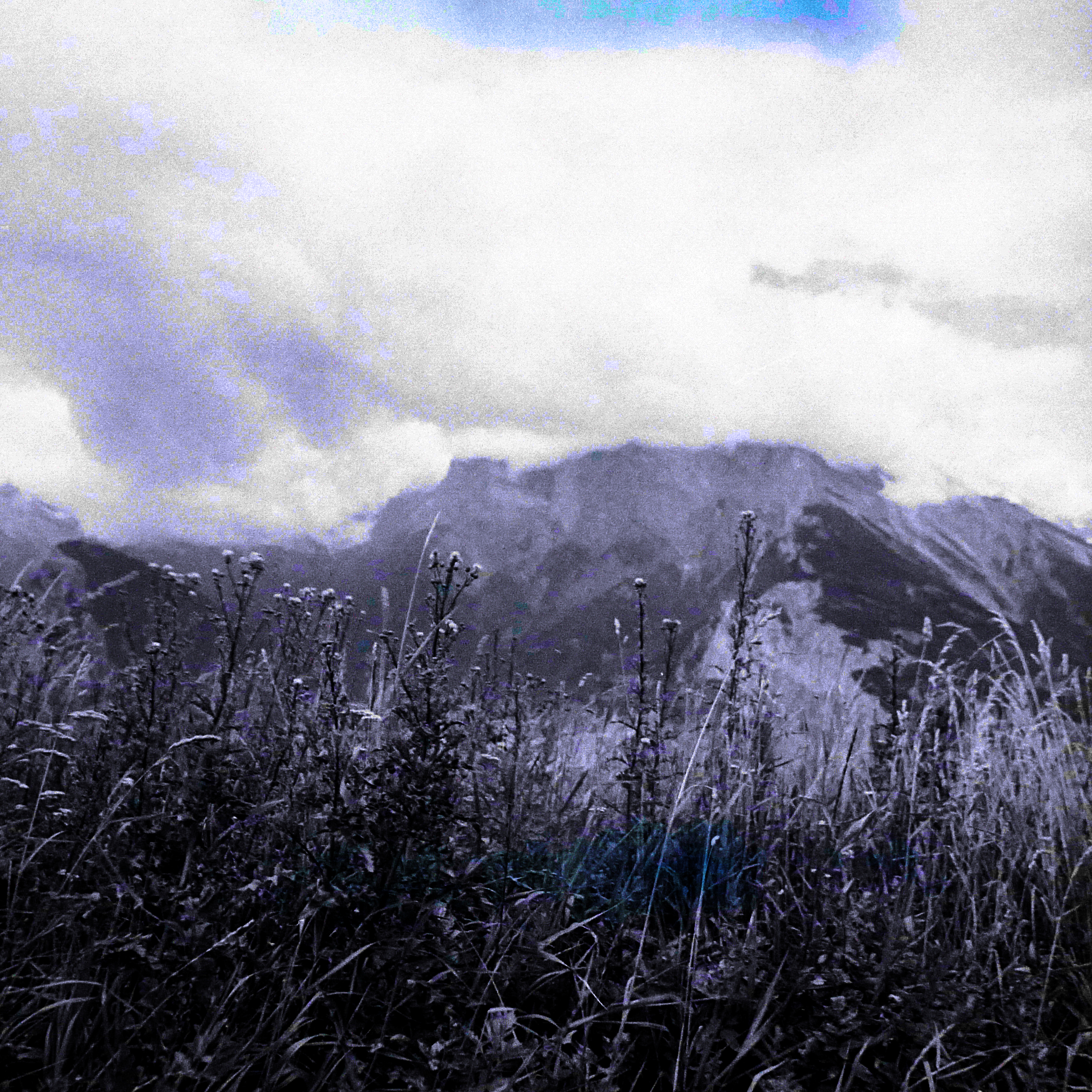
Six watercolor fragments on black-and-white film in Blue, Atelier leZ Art, 2021
Fragments of a Residency
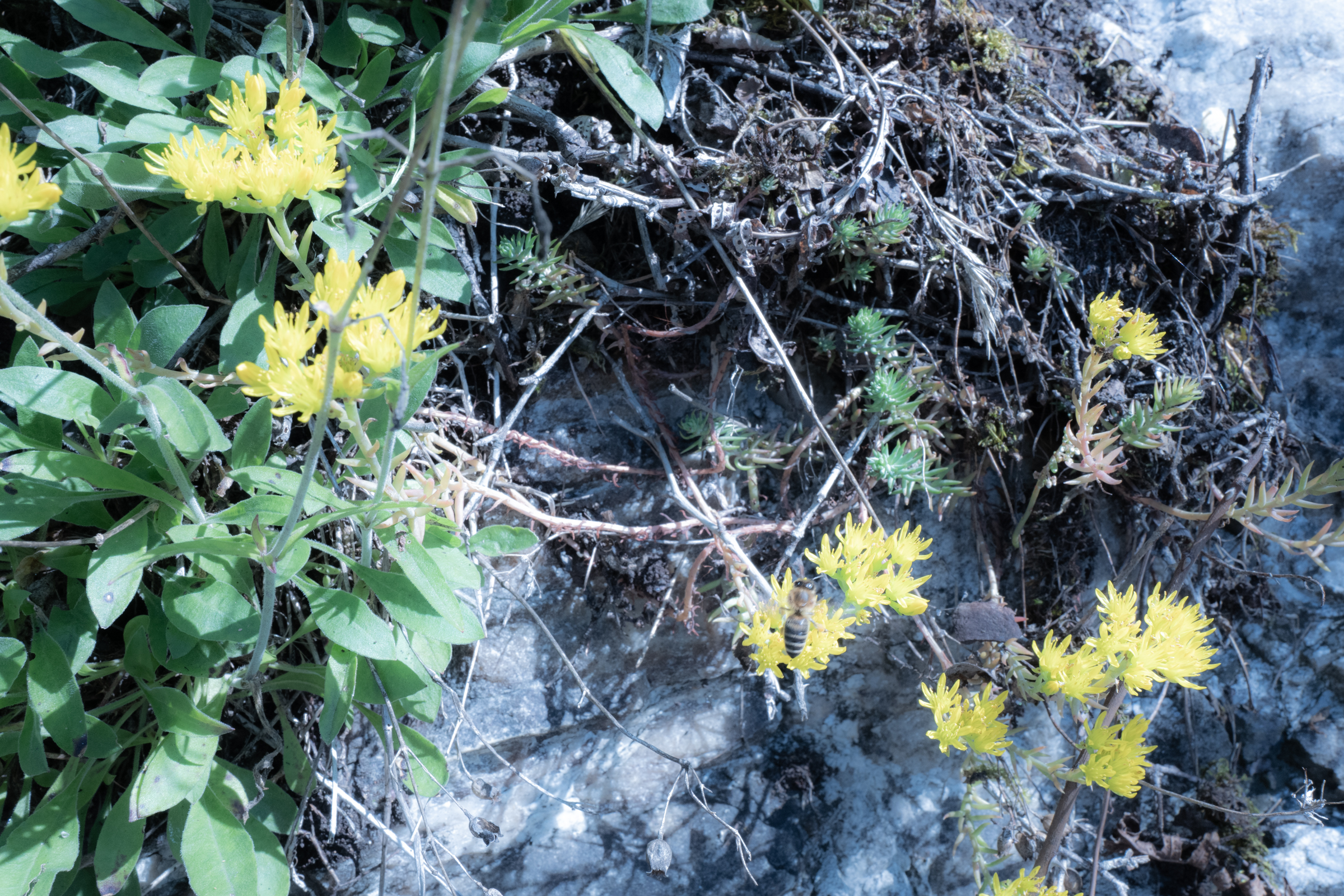
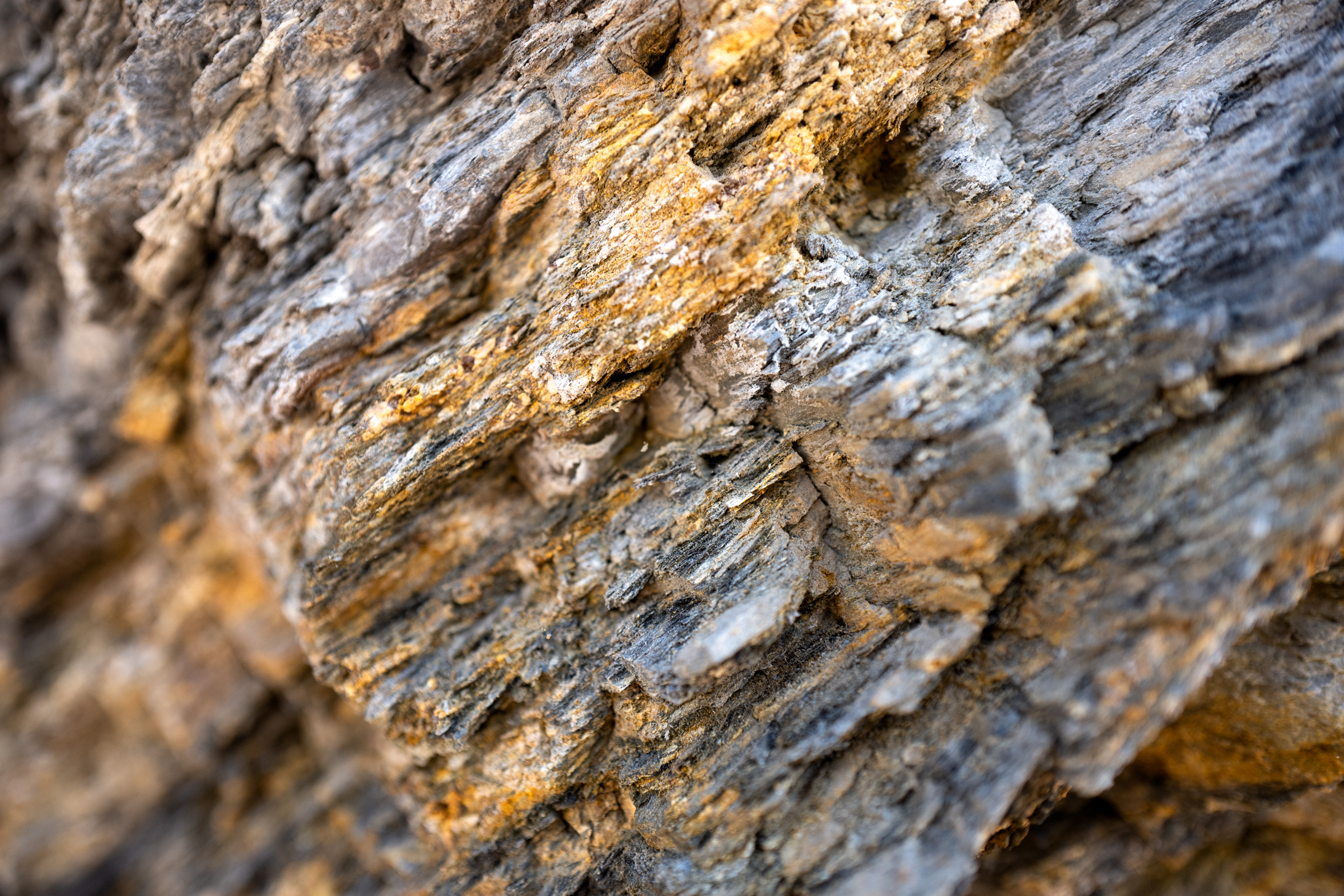
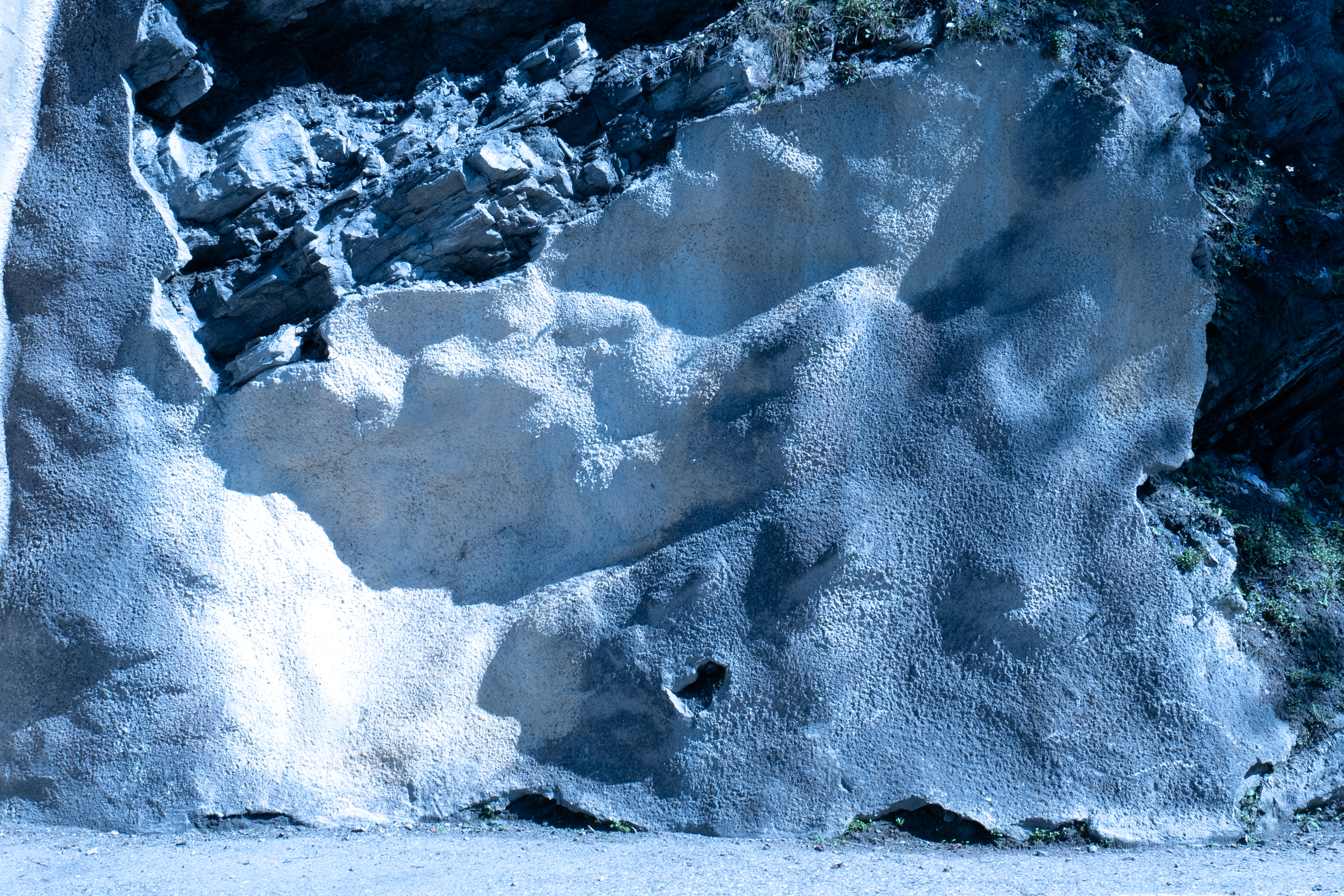
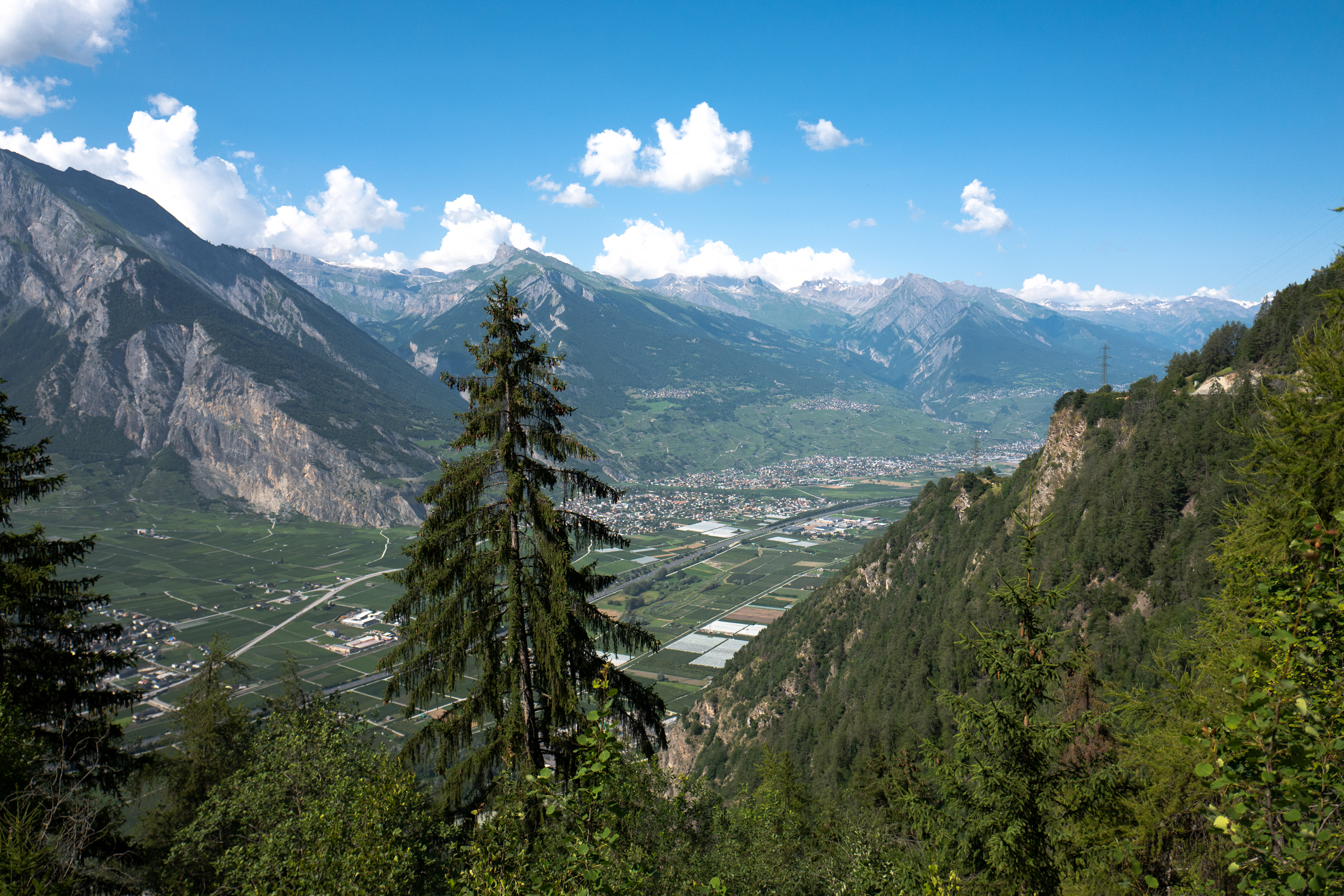
Fragments of daily life, work and observation at Atelier leZ-Arts, Les Condémines.